
soulati.com

Digital Marketing Strategy, PR and Messaging

  • Home
  • So What is Message Mapping ?
  • Services
  • Hire Me
  • Blog
  • Presentations
  • Get a FREE E-Book
  • Contact
  • Home
  • So What is Message Mapping ?
  • Services
  • Hire Me
  • Blog
  • Presentations
  • Get a FREE E-Book
  • Contact

Soulati-'TUDE!

Archives for April 2011

Using Social Media to Launch Start-Up JD Match

04/21/2011 By Jayme Soulati

This is a brief story about how cool social media is and how it impacts public relations strategy to launch JD Match, a new online recruitment site for second-year law students, large law firms and law schools.

I’ve been working with Bruce MacEwen, Esq., an esteemed lawyer and highly credible legal consultant,  and Janet Stanton, CEO of JD Match, who also are affiliated with Adam Smith, Esq., one of the most-respected online publications in the legal profession.

JD Match is an online recruiting site using a proprietary algorithm that will match second-year law students’ preferred law firms with law firms’ preferred students. The  start-up is designed to address the flawed on-campus interviewing process during which the nation’s largest law firms spend thousands of dollars to recruit the best law students from the best colleges of law.

For several months, Soulati Media has developed the public relations and social media strategy with JD Match. The goal was to earn a story prior to noon on Monday, April 18, 2011 in the Wall Street Journal Law Blog prior to the April 20, 2011 live launch of the new website. Three other tier-one outlets would be called and given the embargoed news release in the afternoon of April 18.

The rest of the strategy for the April 20, 2011 launch of JD Match included:

The primary press release and customer story (K&L Gates, one of the largest law firms in the U.S., is the first charter member to sign with JD Match) would hit PR Newswire on April 20, 2011, and the Internet press release would hit via PR Web once the site went live, approximately 36 hours later.

At the time of this writing (11 p.m. ET, April 21, 2011), JD Match has not gone live. Leading up to today, here’s what’s unfolded since Monday, four days ago:

1. An excellent story appeared in the Wall Street Journal Law Blog via Ashby Jones on April 18, as planned.

2. Above the Law posted a brief mention of the news on April 18 by 5 p.m.

3. The American Lawyer editor-in-chief declined the story only to have his reporting staff contact JD Match for an interview the next day (they had seen the Wall Street Journal Law Blog post).  The result was a wonderful Q&A with Bruce MacEwen you can read here. And, prior to this story running, AmLaw Daily developed a Facebook poll asking whether people think JD Match is going to change the face of associate recruiting.

4. The ABA Journal posted a lengthy story about JD Match on April 19. Its reporter had also read the Wall Street Journal Law Blog.

5. 3 Geeks and a Law Blog published a story and pushed it out on its syndicated service, to Twitter, and subscribers.

6. A student posted a question and blog post on LexisNexis Communities about JD Match.

7. A question was posed and answered by several folks on Quora about JD Match on April 19.

8. There are numerous students posting commentary on forums and blogs.

9. Because the site is not live yet, a contact form was created to capture visitors based on the “early news.” There have been close to 500 people who registered with an email address requesting a note when the site goes live.

10. Many people are communicating and commenting via Twitter and Facebook. My challenge was to tweet under the radar with a profile that said “coming soon.” Soulati Media tweeted that way for two months with the goal of earning 75 legal vertical followers; we succeeded.

Here’s some other interesting tidbits about this story:

*No news release has been distributed on any wire services (traditional or online).

*The exclusive was given to the Wall Street Journal Law Blog, and Bloomberg was disappointed they didn’t get the exclusive.

*From a single blog post in the nation’s top law blog, all the activity above has rolled out.

*Adam Smith Esq. posted a blog thanking its team who helped launch JD Match.

*More stories appear daily, and Google Alerts and Trackur are set up to secure the stories.

The wealth and breadth of exposure for JD Match without issuing a news release to the industry has been fantastic to watch unfold.  We’ve not seen a traditional story appear in a printed outlet; the stories have all been online. Once the news is formally launched on the wire and via online distribution, after the site goes live, we’ll see how we handle the next wave.

Meanwhile, follow JD Match @JDMatch and on Facebook and LinkedIn (still under development). (When you get there, please say hello to yours truly…)

Filed Under: Social Media Strategy Tagged With: JD Match, Legal, PR Strategy, Social Media

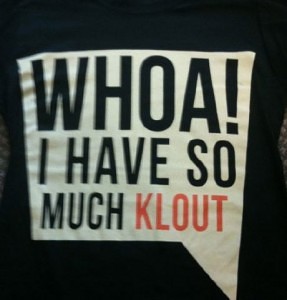
Klout: The Influence of Influence

04/20/2011 By Jayme Soulati

Everyone says you need a goal when engaging social media. Two years ago, when I started tweeting I had no earthly clue where my journey would take me. As a public relations practitioner always seeking the next trend, technology, or new practice, I had to launch into Twitter because everyone was talking about it.  My Facebook page is relatively young, but it’s growing, and I need to give it more TLC.

It took me awhile to earn my stride and slowly my goals took shape. It was never to monetize; after all my products are my words, strategic counsel and educating the profession and business about my passion (PR, if you haven’t guessed by now).

My goal was to be an influencer. There have been so many blog posts written about influence. What exactly does that mean? In my opinion, I like to think it’s authoritative, authentic and accessible leadership.

Let me explain a bit; there are influencers who encase themselves in their glass houses and rarely respond to tweets or questions posed on a blog or Facebook. These people are inaccessible. Being authoritative comes with seasoning. Having an opinion and presenting it genuinely implies authentic authority. Blogging allows for opinion, and comments create accessibility to the blogger. Being authoritative could also be considered arrogant, and that’s not a positive characteristic.

And then came Klout. I have only looked at my score 3 times ever; most recently over the weekend because someone mentioned scores were rising after Social Slam. I had a score of 52, and this weekend it is 60. It says I am an influencer, and that means I have attained my phase one goal.

What’s interesting about Klout is the detail and quantity of information available about your social media activity. I have not heard of anyone putting emphasis on Klout scoring for people hunting for a gig or being considered for a speaking position, have you?

But the more people jockey for position in social media and claim expertise, I’m thinking Klout is going to have greater influence defining who the influencers truly are. Will this become an authentic rating of the influencers? Should it?

I haven’t looked at others’ Klout analytics and I don’t know if I can dissect the data for other people as deeply as my own analysis, but this score may just become the defacto measurement system to separate the wheat from the chaff.

Here are some thoughts for you:

1. What are your professional social media goals?

2. What is your Klout baseline (your score prior to working on increasing it?)

3. Examine your social media behavior; do you ping from blog to blog and comment excessively?

4. When you blog, are your topics focused and do they command any comments? It takes awhile to find a voice; it’s helpful to have a year of blogging before things take off.

5. Are you active on Facebook or do you refuse to let social media control your every waking hour?

6. Is your Twitter stream littered with topics and Tweeps who don’t advance your goals?

7. Are you following a disproportionate number of Tweeps compared to followers? I was just introduced to Tweepi; it’s a wonderful tool to weed out those you followed who did not follow you back.

8. Have you latched onto a rising star and are you retweeting their content to your stream?

9. Is the content you publish from tweets to blogs and comments authoritative rather than just a few words in reply?

10. At the end of the day are you being you?

You may regard much of this as bunk, and it very well may be; however when I  see an analytical tool that can track my online behavior that also points to places I may improve, it is certainly worth more than a passing nod. If, that is, your goal is to become an influencer.

(Image: SocialFresh)

Filed Under: Branding, Social Media Strategy Tagged With: Influencer, Klout

Proving You Can Measure Social Media

04/19/2011 By Jenn Whinnem

“You can’t really measure the ROI of social media.”

I heard this eye-popping phrase at a local social media panel about “Social Media and the Media.” The panel consisted of an impressively tenured reporter, a multimedia content producer for a local news station and newspaper, a professor of communications, and a recent graduate who was fortunate enough to have landed a marketing job for a digital news purveyor.

All four discussed how social media was transforming journalism and their jobs. (Several people in the audience were pretty unhappy about the “tainting” of journalism, but that’s for another post.) All four panelists were adamant that journalists needed to incorporate social media into their jobs – that it was very important.

Yet when asked about, “How are you measuring success?” not one of them could really answer the question. That was when someone spoke of the inability to measure ROI for social media. I was even so bold to raise my hand and ask, “Do you mean to tell me you don’t have metrics that you report on to your bosses?” and they all assured me quickly that they did, but they didn’t say what they were specifically.

I want to set the record straight. Yes, you can measure the impact of your social media. Yes, you can measure the ROI of social media. A lot has been written about this, so I won’t reinvent the wheel here.

First off, it’s worth mentioning – Olivier Blanchard has written an entire book about this, Social Media ROI . I think it’s safe to say the book came out of this PowerPoint which has been popular with social media people since I’ve been involved (two years ago now), and possibly before. It’s a good place to start if you’re thinking on how you can prove to, say, your CFO that this is something worth doing.

Overwhelmingly, the advice you’ll find when you ask a social media consultant about measurement is “first you have to decide your goals, then you decide what to measure.” Hey, Gini Dietrich says it right here and then tells you how. Here  Mack Collier gives you some specific measurements you can make against specific goals – even if you’ve already gotten started, it’s not too late.

Rebecca Denison blogged here about measuring your personal brand. In this post, Rebecca walks you through how she measured her brand – and you can take her logic and apply it to your business situation, as well.

One of my favorite posts about picking a metric to use is Stanford Smith’s post about Klout and how social media experts are really good at pointing out the problems with certain metrics – and makes the case for the Klout score, something every social media expert should at least be familiar with. There are other influence measurement tools, but I really like the data that underlies the Klout score best.

Brian Solis weighed in on the ROI of social media last year here. It’s a long read, but the payoff is worth it.

Are you a nonprofit? Don’t worry, you can do it, too. Beth Kanter, who is something of a celebrity in the nonprofit and social media space, wrote just recently about this here — within the post is a link to Beth’s recent presentation on social media ROI for nonprofits – a great read.

So, that’s where I’d start. Did I hit the mark with measurement? What information would you share with my fellow audience members about social media measurement?

Image: BlueWaterDirect.com

Filed Under: Social Media Strategy Tagged With: Measurement, Social Media

What’s Your Avatar Say?

04/18/2011 By Jayme Soulati

At Social Slam (yes, there was a bunch of blogging inspiration at this conference) April 13, 2011 sponsored by the Knoxville Social Media Club, there was a lot of chat about an avatar and what it should be. I suggested during a panel presentation that your avatar should not be a dog, a baby, an animation, or a corporate logo.

Because social media is social, and you’re building a network, it’s important to put on a face (I prefer happy, but you may not). People you tweet with especially want to identify with a person and connect with a familiar face. When you humanize your Twitter brand, you create a relationship with your followers; Tweeps are more inclined to follow you back and engage.

If you’re not tracking with me yet, an avatar is the image you use to identify your Twitter account, your Open ID, your comments, etc. You can register the image you prefer at Gravatar.com and it will soon populate when you comment on other blogs via Disqus, LiveFyre, and elsewhere.

We recently gave a lot of grief to Neicole Crepeau who for the longest time (perhaps a year) had a line drawing of her face. When she finally put up a photo of herself as a test, I tweeted it loudly and clearly to everyone “Neicole has a photo, Neicole has a photo, nanna, nanna boo boo.” (She accused me of never sleeping.) Now that I know what Neicole looks like, I feel more connected to her.

During Social Slam, a question from the audience was posed to our panel of Trey Pennington, Anne Deeter Gallaher and me (we spoke about communicating value about social media to the C-suite). What should people who team tweet for a corporate account for which the avatar is a logo do to identify themselves when they are tweeting? Adding initials within a tweet is a helpful solution; if it’s possible to use a  symbol with initials or first name as a signature in a corporate tweet, that may also work.

When I arrived at the hotel in Knoxville to check in, someone in the lobby said “you look really familiar.” It wasn’t a pick up line, was it Billy Mitchell? When I suggested Twitter, he recognized me. What was cool is that I also picked out other people during a reception from having seen their avatar in my stream.

When you look like your avatar, that’s a good thing. It creates ‘raderie, it personifies you, it causes reaction in people, and it’s part of creating a professional brand. If you aren’t sure whether your avatar is a good one, take a poll, but be prepared when Tweeps are brutally honest; after all, you asked!

Filed Under: Social Media Strategy Tagged With: Avatar, Twitter

Content Is Still King (via Social Slam)

04/15/2011 By Jayme Soulati

I attended Social Slam sponsored by the Knoxville Social Media Club April 13, 2011, and one thing was clear — content is still king in social media. We sat through various panels and 3-4 keynote addresses throughout the day.

On the panel I sat on (as a substitute presenter), my colleagues Trey Pennington and Anne Deeter Gallaher spoke with me about convincing the CFO that social media had incredible value. My analogy was to compare it to advertising — when you run a print ad, does it garner immediate results, leads, conversions, impressions, sales? Nope.

While everyone was touting ROI (my favorite statement was by Amy Howell of Howell Marketing who said ROI meant “risk of ignorance”) for social media and how to communicate its value add with measurable impact, the thread that binds all of social media is critically basic. It’s CONTENT.

Let’s think about that a sec. Businesses far and wide are jumping on the social media bandwagon, finally. Regardless of how large the company or organization is, each has one thing in common — the need to develop content, a tweet, a post, a blog article, an Internet press release, a website page, a landing page, tips series, white paper, case studies, and more.

Even prior to engaging and creating a community, the message becomes the only thing that matters. And, so, with my PR hat, I encourage each of you, regardless of whether you’re a solo practitioner, corporate communicator, not-for-profit, agency peep, or consultant to do the following:

  • Create a message map for your brand. Within this framework, tell your story much like Trey Pennington, one of the most impressive storytellers I’ve had the pleasure of meeting IRL (I learned that at Social Slam — “in real life!”).
  • Consider using a mind map brought to you by none other than Roy  Grubb, my tweep king of mind mapping who runs a wiki Information Tamers on all things mind mapping. Using this tool, show the progression of your marketing path and where you want to push your message.
  • Knowing social media is a time suck, get in the habit of taking your iPad2 (I’m blogging on one right now while kidlet is in taekwando class) with you everywhere to jot a note about something that strikes you. (You can use the traditional method of pencil and paper, too, you know!) Content development is inspired at the oddest times; I come up with blog post ideas while hiking the trails, just before bed (that’s why I have to read sci-fi and fantasy before I sleep because there’s no chance I’ll think about  business reading that crazy stuff).
  • Hire a junior person to draft 25 tweets on a topic oriented to your work. These can be basic and good filler throughout the week when you’re trying to buy some time back. At the same time, hire some people to research for you, too. I find research time a luxury I don’t have. If someone can pull the studies and review blog posts for me, then I can draft the copy.
  • There is an art and skill to Twitter and Facebook. If you’re naturally effervescent with words, and your personality shines through, then you can get away with engaging naturally. If you’re shy and have trouble with free speak, do a lot of reading, listening and testing the waters. Adopt a topic you’re comfortable with until you find your stride.

It takes a pretty seasoned public relations practitioner to be able to develop all variations of content as mentioned above. Not every department or firm or team is going to find that in house; it’s highly likely you’ll need to hire it out, and the best place to comb the field is at industry events the likes of Social Slam.

Mark W. Schaefer, the event emcee, announced next year’s event is at the end of April in Knoxville. Plan to attend; it was well worth it, and every age group was in attendance among the ~450; that’s darn impressive.

Filed Under: Social Media Tagged With: Social Slam

« Previous Page
Next Page »
ALT="Jayme Soulati"

Message Mapping is My Secret Sauce to Position Your Business with Customers!

Book a Call Now!
Free ebook

We listen, exchange ideas, execute, measure, and tweak as we go and grow.

Categories

Archives

Search this site

I'm a featured publisher in Shareaholic's Content Channels
Social Media Today Contributor
Proud 12 Most Writer

© 2010-2019. Soulati Media, Inc. All rights reserved. Dayton, Ohio, 45459 | 937.312.1363