soulati.com

Digital Marketing Strategy, PR and Messaging

  • Home
  • So What is Message Mapping ?
  • Services
  • Hire Me
  • Blog
  • Presentations
  • Get a FREE E-Book
  • Contact
  • Home
  • So What is Message Mapping ?
  • Services
  • Hire Me
  • Blog
  • Presentations
  • Get a FREE E-Book
  • Contact

Soulati-'TUDE!

Jeremiah Owyang Says The Crowd Is Your Company

12/12/2013 By Jayme Soulati

crowds-Soulati.jpgJeremiah Owyang inspired this post with his provocative and visionary comments about the future of business. He was interviewed right here by Bryan Kramer of Pure Matter in 26-minutes of attention-grabbing provocation about the crowd and also by Wired magazine.

What Jeremiah is doing now, after a stint with Charlene Li of the Altimeter Group as an analyst and also former social media rock start, is a new venture of his own called Crowd Companies He’s aligning the biggest brands onto a council to collaborate about joint campaigns to engage with the crowd in innovative ways. It’s fascinating stuff, and Jeremiah has my wheels spinning to imagine the possibilities.

Let me catch you up, and you can go in-depth by watching the video of Jeremiah and Bryan below:

The Anti-Material Society

We’re entering the anti-material society (that’s my thinking) based on what I heard today – consumers don’t want ownership, they want access to ownership.

Case in point, Airbnb. The future will see the largest hotel chains getting in on the action of home rentals owned by the hoteliers for a greater piece of the pie. The bonus for guests – the loyalty program Airbnb can’t offer yet.

Home Depot and Lowes are big on renting equipment instead of requiring folks to buy new and use it once only.

Jeremiah recommends a book by a collaborator, Lisa Gansky – The Mesh: Why The Future of Business is Sharing (which I just bought).

Consumer Customization Is The Future

There’s a movement afoot to customize one-off items beginning with a single t-shirt, five books, and other printed items on demand. Jeremiah says we’ll soon see houses, clothing and automobiles made to fit personal consumption!

Think of what that means for the supply chain! No more huge auto manufacturing plants with assembly lines of the same upholstered driver’s seat. There will be longer seats to accommodate tall man, and wider seats to accommodate ample booties. Oh, yeah, and that neck rest that NEVER hits you right? You’ll get measured for that.

But wait, we’ve already seen some of this happening and we’ve not put two and two together. My nephew works in a mattress factory, and people can custom order a mattress based on weight, girth, height, and body aches.

When I bought my bicycle a few years ago, I stood in front a machine and they measured feet to butt and shoulder to fingers to determine the best fit for my bike. They stopped short of building a custom bike (ahem, I didn’t want to spend the $$), but the potential was there.

The Crowd Is Your Company

Look at what happened in the social media era. The earliest adopters were consumers jumping all over likes and follows like fish to water. The public relations professionals and marketers and bloggers became the leaders from the business side.

Did business catapult into social media with glee? Not so much. Although there’s a term, social business, it’s a misnomer, says Jeremiah in the video below. There’s an extreme disconnect with that term because businesses are not social at all.

Here’s the consequence of that…the crowd? They’re now part of your company, nearly absolutely the same as your employees.

Resilient Brands Will Last

What we need to do is watch what happens with Mr. Owyang’s Crowd Companies’ council. We’ll see the visionary thinking he’s sure to unearth by coupling the biggest brands in the name of the empowered consumer.


Related articles
  • Jeremiah Owyang forms Crowd Companies
  • “We Are a Catalyst”: Jeremiah Owyang Discusses Crowd Companies, His Bold New Venture for the $110 Billion Collaborative Economy
  • How companies can leverage the ‘collaborative economy’ (Q&A)
  • Crowd Companies is an association to help big companies better understand the collaborative economy
Enhanced by Zemanta

Filed Under: Business Tagged With: Airbnb, Altimeter Group, Bryan Kramer, Charlene Li, Home Depot, Jeremiah Owyang, Lisa Gansky

About Weibo: Understanding Chinese Social Media

12/10/2013 By Jayme Soulati

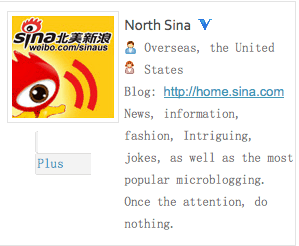
Weibo-Soulati-screen-shot.jpgFew social media users have reason to care what Sina Weibo is; however, if they work for a multi-national company, it’s guaranteed that company is all over Weibo, and for good reason!

Weibo is the Chinese microblogging service with more than 505 million users launched in August 2009 for people who speak, read and write Mandarin and Cantonese. Daily active users number 54 million, says The Wall Street Journal. The site also caters to users from Hong Kong and Taiwan. To describe it further, it’s a hybrid of Facebook and Twitter with a 30 percent penetration rate in the country.

Sina (NASDAQ: SINA), which means new wave in Chinese, is the publicly traded online media company that created Weibo in China. Its site registers 100 million users, while its Sina Weibo has 56 percent of the Chinese microblogging market. What’s also appealing is that the top 100 users of Sina Weibo have 180 million followers combined.

Guess what else we can rely on trusty Wikipedia to inform us? There are about 100 million messages posted each day on Weibo. Sina is developing an English platform now and put a test up in January 2013; however, pulled it down after one week. Users have to be Chinese citizens to register on the platform.
Competition

Sina Weibo has enjoyed three years of un-rivaled monopoly on Chinese social media channels. Recently, however, Tencent Holdings is gaining with its “WeChat mobile app similar to WhatsApp and Line that allows users to post status updates, share photos and even strike up quick romantic encounters,” according to the Nov. 11, 2013 Wall Street Journal, “A Glimpse Into China’s Social Media.”

In the Wall Street Journal story written a day before third-quarter earnings Nov. 13, 2013, it was predicted by investors that Sina would lose some ground to Tencent. Upon checking status of the investor reports; however, Sina proved everyone wrong with an 11.38 percent boost while Tencent lost ground by 4 percent. Tencent boasts 236 million monthly active users, according to the Wall Street Journal.

Similar to support by Sina Weibo for the Chinese soccer team to play against Villarreal CF, Tencent has put $200 million to work for an advertising campaign with a single FC Barcelona soccer player, Lionel Messi, to advertise WeChat outside China.

Features of Weibo

If a user familiar with Twitter were to adopt Weibo, they’d find many feature similarities:
• 140 characters
• @ sign for the ID
• RT for retweet
• Hashtags to track trending topics
• Url shortener t.cn
• Newsfeed

Other features allow users to post emoticons, video and images with every post, repeat some or all of the comment, add favorites, verify whether the account is a celebrity or a poseur, and see the thread of the post immediately in the stream.

Weibo-screen-shot.jpgRegistration

Since China is the fastest-growing economy in the world, you can imagine why global consumer products companies are drooling over how to reach the affluent Chinese market.

Prior, you had to be a resident of China to use Weibo. Now, all you need is a Facebook account to register if you’re outside mainland China. Multi-national businesses should regard this as good news because who isn’t seeking entrée into China for consumer products?

When a global consumer products company registers on Weibo, their account will be symbolized by a blue V badge indicating verification of an enterprise account.

Like Twitter and Facebook, there are bots and anonymous people who set up accounts to post content that is typically negative, controversial or anti-establishment. The significance of the blue V on an enterprise Weibo account is important for users to verify which account is authentic.

There are many people who want to post content on Weibo as Gucci, for example. If a user gets three posts from “Gucci,” they can easily discern which one is authentic by the blue V.

Users Can Authenticate on Weibo

Just like brands and businesses, users who actively engage on Weibo get to post a badge on their Weibo personal profile page. These badges are called active engagement badges and help position users who are high-level engagers. The badges for users dictate the frequency an account is in use. The badges are scaled via an LV number or level number. If you were to view LV3 on a user’s profile page, that indicates low-level activity; however, LV 7 is indicative of an active user.

Fashionbi Analysis of Weibo

Fashionbi is a world leader in fashion business intelligence via analysis of social media engagement among the world’s most well-known fashion brands and companies.

Part of its analysis includes activity on Sina Weibo both from the brand and user perspectives. Fashionbi looks at a variety of social media engagement factors to determine where users are most active. It estimates nearly 15 percent of the fashion brands it tracks are using Weibo.

In its analysis of Weibo user engagement activity for fashion brands, Fashionbi found that 50 percent of Weibo users who engage with fashion brands are accessing the social media channel via mobile devices. In particular, Coach gets 35 percent engagement on Weibo from a mobile device with an additional 28 percent of activity documented from an iPhone or Android device.

Mobile Advertising in China

We--Chat-Screen-Shot.jpgAlthough Weibo users seem to have a penchant for mobile advertising, Sina needs to exercise caution about how many ads it places on Weibo. This is unmarked territory for all social media companies in China, and the hunger by the Chinese for what’s new in consumer products is dictating the speed with which companies are launching advertising campaigns. Consumers could tire of the prolific mobile ads interrupting streams; that threshold has yet to be met, however.

In China, unlike the United States, social media consumers seek mobile advertising to influence a buy decision. In a blog post about Tech In Asia, a recent study by RenRen showed 53 percent of Chinese who use mobile devices said a buy decision was influenced by a mobile advertisement while 76 percent said they have made a purchase using a mobile device.

Fashionbi suggests WeChat is the channel to watch for further mobile advertising proliferation as Chinese tourists use the app all the time. Luxury brands have an opportunity to meet vacationers when they have money to spend and time to shop.

Alibaba And Laiwang

Alibaba, the Amazon-like online marketplace serving China, is heavily aligned with Weibo. A partnership deal was struck earlier this year with Alibaba Group Holding and Sina Weibo that will generate $380 million in advertising for Sina over three years, states the Wall Street Journal. Brands selling items on Alibaba are also doing the same via Weibo with great luck. Coach, for example, has an online store on its Weibo brand page which is an appealing and simplified way for the billion consumers in China to engage and buy.

Alibaba is cash rich, and in response to concerns it has lacked in popular apps, it boosted efforts to create a new messaging app, Laiwang.

Founder Jack Ma is banking on employees to keep Alibaba growing. Look at these marketing initiatives the company has launched to grow:

• He sent a letter to the company’s 20,000 employees saying they had to add 100 friends on Laiwang or they will not get a bonus.
• The company is also using model appeal to lure new users to Laiwang. There are 30,000 young female models who will chat any time with new users on Laiwang.

There’s one thing Western nations can be sure of. The Chinese consumer is eager and hungry to more, and companies the likes of Sina, Tencent Holdings and Alibaba are providing the food via major investment in mobile apps, mobile advertising, sponsorships, promotions, e-commerce, and social media channel usability.

Would you like a piece of the pie?

This post first appeared on Steamfeed.com authored by Jayme Soulati.

Filed Under: Business, Social Media Tagged With: Ali Baba, China, Chinese Social Media, global branding, Laiwant, Sina Weibo, Social Media, Tencent Holdings, Weibo

Get Ready For The 2014 Mobile Marketing Revolution

12/09/2013 By Jayme Soulati

Soulati-Media-mobile-marketing.jpgMobile Marketing. It’s ubiquitous; yet few businesses truly understand what it means. Let’s break it down to the basics and see if we can’t get you pushing brain power to smart devices to better understand what this means for you.

Smart Devices Are Prolific

  • When you’re waiting in line at the retail center this holiday season (it’s what I did this weekend), look at the moms with strollers and shopping carts. What are the kids holding to occupy them whilst mom shops? Tablets! There were more children on tablets strolling through the store than I’d ever seen (and each kid had one so they wouldn’t fight).
  • When you’re sitting in the movie theater waiting for the junk and previews to stop (what, like 20 minutes?) count how many peeps are surfing or reading on tablets, smartphones or e-Readers. Bet you can’t count that high, can you? Uh-huh.
  • Now, step up your thinking a notch and imagine the shoppers doing cost comparisons online as they stand in front of a store display. Do you know what’s happening? Retailers are offering a 10 percent cut from online prices.

That’s how I just bought my new Babolat racquets; strolled into Tennis Zone and asked how much (after months of demoing each one), and the clerk looked up the online price and cut it. Pretty soon the smart retailers will have Wifi-ready touch screens installed throughout the store for folks to comparison shop right there and see that the deal in the brick and mortar is better than the online price (it’s a no-brainer because of shipping and other service fees, right?).

  • Let’s think about one b-to-b example here…I do a ton of online research because I’m a professional blogger. I have to back up my content with a few proof points when I’m really trying to be smarter than the average bear. Research takes time, and I appreciate those 20 minutes in the movie theater to scroll through websites for the best downloadable content I can read later. That content looks primarily like a stale PDF; what’s your take on that?

Navigate Backward From the Mobile End User

To fully understand, because we can list about 50 examples like the ones above in a nanosecond, let’s do a backward navigation from the movie-theater surfers and the comparison shoppers’ end-user experiences.
What do they need on those smart devices to 1) Keep them clicking 2) Earn their loyalty and 3) Earn a high net promoter score? (You know what NPS is, right? Those who love it promote it; those who hate it detract with negative posts and shares.)

  • A Mobile, Responsive Website. We’ve been speaking about this for more than a year now. Every website built must be designed two ways – for desktop and laptop computers AND for smart, mobile devices. For the latter, it takes some design strategy to determine how to present the website onto the small, vertical (iPhone) screens. The design needs to scale to each screen regardless of size; the site needs to “respond” to the device’s parameters. If your company isn’t mobile ready in early 2014, you will play serious catch up (kinda like the social media train? It left the station two years ago?).
  • Interactive Content. Consider switching your content format from the dead PDF to an interactive magazine, whitepaper, newsletter and infographic. For anyone using the iPad or other tablets, this format is necessary and required. Because smart devices (phones and tablets) will be the most popular gift this holiday season, according to Gartner, tablet shipments will increase 53.4% to reach 184 million units by the end of 2013, you need to take a hard look at how you’re presenting content.
  • Long-Form Content & Video. If you’re a professional blogger or a budding blogger writing for a company blog, you need to look at lengthier content, about 1000 words on average, with links, imagery, tips and teachings. It’s never a dull moment in Google land, and SEO continues to shift seismically (hmm, didn’t know that was a word!). Video has always been important to a website and blog because of the marriage between Google and YouTube, for one; not to mention the 80 gazillion users and videos viewed, shared, posted, and embedded on YouTube daily and globally.
  • Engage on All Screens. https://blog.readz.com/driving-conversions-sales-mobile-inbound-marketing/ Remember, your television is a screen. People don’t always watch their favorite shows on TV; they turn to a tablet, notebook, laptop, or desktop. Think about how you can cross-pollinate each screen available to the end user with some activity that makes them engage. According to Google’s Mobile Playbook 2013, 84% of multiscreen shopping experiences include mobile devices.

NBC The Voice

Let me provide my favorite example…do you watch The Voice on NBC? It’s coming to a head where America will choose the winner in the next 10 days or so. To select the contestants who get to stay in the competition, America votes by text via sponsor Sprint, via Facebook, by downloading single songs on iTunes, and via The Voice website. This year, a brilliant strategy was introduced – the Twitter instant save. As the bottom three contestants were standing there to see who was saved, America got five minutes to tweet the name of the singer they most wanted to save along with a hashtag. The Voice engaged America as they tweeted their favorite choice to save, and in five minutes the votes were tallied, and the singer with the highest number of tweets and retweets was saved. This is ingenious, and a perfect example of how The Voice team engages viewers on all screens.

Google published The New Multiscreen World report detailed in this blog post here by Readz, the company creating “amazing mobile experiences” online by bringing dead whitepapers, PDFs, newsletters, and more alive with interactive links, images, and user-engaged elements.

Get the Website Mobile Ready First

It’s daunting, isn’t it, when you see all of the above above? It’s hard to know which step to take first, and that’s why you start at the beginning with your website. If your site is not mobile ready, I’m going to suggest to you a complete review and likely overhaul of your site.

You need to get a new mobile responsive template and design and develop the site for a variety of screens (see above) that scale. Get it working on the largest iMac screen, and then get it going for the smart devices. Find a developer who really knows what she/he is doing; it’s critical. All the rest will follow in good fashion.

Engage in Message Mapping, Too

I’m also going to suggest you launch a Message Mapping exercise with me to ensure you get your content strategy for external audiences solid. You might like this e-book I wrote (sadly, it’s in a dead PDF…hmm, maybe I need to engage with Readz?), Message Mapping: How to Deliver External Communication with a #RockHot Tool for Leaders.

By the way, what’s a long-form blog post without some required self-promotion? Got any questions? You know where to find me!

{Disclaimer: Sponsored Post}

Filed Under: Mobile Marketing Tagged With: Content Marketing, Google+, Mobile Markeitng, Readz, responsive design, smart devices

The Happy Friday Series: She Loves to Heal

12/06/2013 By Jayme Soulati

Michelle-Quillin.jpgWhen a woman the likes of Michelle Quillin gets on your good side, and she’s never on anyone’s bad, you have the privilege of a friend for life, a supporter extraordinaire, and the most loving individual you’ve never met.

It’s a good thing we now can all G+ Hangout, for it took me about three years to “meet” Michelle in sorta IRL. She’s worth the wait.

Michelle is the better half of New England Multimedia, the WordPress design and development firm in Rhode Island. Back in the earliest days of our ‘raderie, she was part of the SMB Collective with Neicole Crepeau, Jon Buscall, Jenn Whinnem, and me. We blogged together in 2010 for awhile, and it’s been nothing but a building relationship ever since.

Michelle is one of those people who makes instant friends with most everyone. On Facebook she has a scourge of admirers from foreign lands who insist on getting to know her…LOL…I’m not supposed to share that with her husband, Scott!

What always impressed me about Michelle is her command of Facebook community building. In the earliest days, she took to the channel like a fish to water and had oodles of likes and comments on her posts. She asked questions, and got people to reply; she posted surveys and earned responses…she knows her Facebook!

In her real other life, Michelle is a youth minister guiding troubled youths through troubled times. Yet, she serves over and above and home schools teens (not hers) who need attention. She has played nanny to infants and toddlers whilst the teen mother attended school. Michelle keeps this side of her life private to the extent she can; however, a woman so devoted to nurturing, giving and caring needs to also be recognized in some small way. She is an angel and messenger who loves and lives to heal.

She has always been part of this community, and she wrote a piece for The Happy Friday Series, too. I thank you, Michelle, for always contributing, being there and here. My warmest best.


Related articles
  • The Happy Friday Series: Alaska Chick
  • The Happy Friday Series: The Happiness Crusade
  • The Happy Friday Series: Recipe For Happiness
  • The Happy Friday Series: She Writes Right
Enhanced by Zemanta

Filed Under: Happy Friday Series Tagged With: Facebook, Happy Friday Series, Jenn Whinnem, Michelle Quillin, New England, New England Multimedia, Rhode Island, Social Media, WordPress

Content Marketing Needs Mobile Publishing Apps

12/05/2013 By Jayme Soulati

Soulati-Media-mobile-marketing.jpgWhen you say and see content marketing touted all over the Interwebz, it’s more about blogging, right? But what about the other pieces of content so critical to attaining goals and objectives? The white paper is one of the most important documents a business can include in its content marketing strategy; yet, few engage with white papers?

Why?

The first reason there are fewer white papers is obvious – they are more challenging to write, right?

Secondly, if a business does not have a solid inbound marketing strategy to use white papers as a lead generator for sales, then companies merely rely on blogging.

Revisiting Inbound Marketing

As a digital marketer, the goal for inbound marketing is to feature content as the lure, if you will, to generate leads from external audiences which turn into conversions.
Think of a funnel when considering what inbound marketing looks like. At the top of the wide open funnel is a wide berth of content ideas e.g. 10 reasons why you need a certified plumber; 25 social media tips from an SEO consultant; 7 critical mobile apps to fuel your mobile marketing strategy in 2014, and more.

These pieces of content can be blog posts, lists, tip sheets and even broader white papers on related topics to these respective themes. They are offered to interested prospects via a call to action in a sidebar of a website on a website page and even more pertinent – on a specialized landing page.
Once the individual indicates they want to download the content, they are asked for their email via a form and the free content is made available.

Publishing Formats for Content

Because a white paper is lengthier than a page; they’re often about 2000 words, give or take 800, the immediate format consideration is a PDF. Think about PDFs a moment. This file format is ubiquitous, and everyone relies on it. However, is it the best file format for your content marketing strategy?

No, and here’s why…PDFs are one dimensional without hyperlinks and without the ability to convert leads, without SEO, and basically, they are DEAD!

Now think a moment about your company newsletter (yes, there are still b-to-b companies publishing newsletters). Typically, it’s posted in a news center as a PDF or sent as a PDF in an email marketing campaign, right?

New Mobile Ways To Publish Pieces of Content

The proliferation of mobile marketing is the biggest trend since sliced bread. I’m not kidding. There are data galore shoving businesses to responsive mobile marketing, and your company needs to get there, too.

The first step is to make your website mobile responsive. You want the pages and elements of your site to scale to any portable and mobile device. Just last weekend, I sat in the movie theater during the pre-movie junk surfing sites on my iPhone, posting to Twitter and resharing content plus commenting on blogs. Look around the movie theater next time and see if others are doing the same? Then, think about your company’s website and worry that it’s responsive for this mobile audience.

Secondly, explore mobile publishing platforms. I recently explored a web app that makes publishing live content, such as white papers, magazines and newsletters, a breeze. Check out this demo of Readz right here. What you’ll see is the ability to scroll pages, click on hyperlinks, enlarge images, and simulate reading a document page by page – from left to right (unlike a PDF that is up to down in a vertical orientation).

You may use the cool iPad apps like Flipboard or daily newspapers and magazines? These apps make the user experience way more intensely entertaining. It’s time for you to do the same with your mobile- and-inbound marketing strategy. Eliminate the dead PDF file format from your content marketing and put in a live publishing platform for all your documents; your audience will thank you.

{Disclaimer: Sponsored Post}

Enhanced by Zemanta

Filed Under: Mobile Marketing Tagged With: Business, Digital marketing, inbound marketing, iPhone, marketing, Marketing and Advertising, mobile publishing, Publishing, Readz, responsive design, responsive mobile publishing, Twitter

« Previous Page
Next Page »
ALT="Jayme Soulati"

Message Mapping is My Secret Sauce to Position Your Business with Customers!

Book a Call Now!
Free ebook

We listen, exchange ideas, execute, measure, and tweak as we go and grow.

Categories

Archives

Search this site

I'm a featured publisher in Shareaholic's Content Channels
Social Media Today Contributor
Proud 12 Most Writer

© 2010-2019. Soulati Media, Inc. All rights reserved. Dayton, Ohio, 45459 | 937.312.1363