
soulati.com

Digital Marketing Strategy, PR and Messaging

  • Home
  • So What is Message Mapping ?
  • Services
  • Hire Me
  • Blog
  • Presentations
  • Get a FREE E-Book
  • Contact
  • Home
  • So What is Message Mapping ?
  • Services
  • Hire Me
  • Blog
  • Presentations
  • Get a FREE E-Book
  • Contact

Soulati-'TUDE!

Corporations Do Not Understand Social Media

10/13/2010 By Jayme Soulati

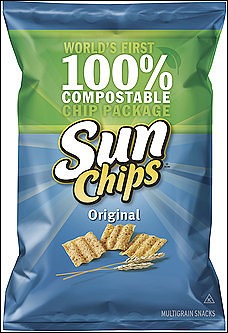
I just wrote last week about the Frito-Lay Sun Chips packaging debacle here. I was aghast then, and I’m even more agog today about the Gap logo debacle that has made these two Fortune companies laughing stock.

What is happening to corporate America that permits their caving to public social media outcry about a green potato chip bag or a new corporate identity?

After four days of online whipping about its brand identity developed by an agency, Gap has pulled its brand new logo in favor of the old, archaic logo we’ve seen for decades. Blog posts, Facebook and Twitter accounts have been in an uproar about Gap’s newly designed logo. I just saw a post saying proudly, “Twitter responsible for Gap logo demise!”

I’m not doing my research to provide you with all the wonderful statistics on how long the Gap logo has been around, how much money people are wasting, what the comments have been and how many in social media circles, etc. because I don’t care, and I didn’t read the four days worth of posts on this topic. It wasn’t my business to tell Gap its new logo was ugly and stood for nothing.

Where I will spend some time making it my business is these two corporations on the heels of one another making jokes out of themselves while taking social networks for a free ride. The publicity each has garnered, while not positive, could not have been bought by advertisers. Our valuable time thinking about these mistakes was wasted, too.

What’s more shocking, is that it appears RESEARCH IS DEAD. It’s not public relations that’s dead; it’s not customer service that’s dead; it is truly research that’s dead.

Had Gap and Frito-Lay done its research in more than just the typical traditional way (focus groups?) and launched social media contests to vote on the bag or logo Facebookers liked best, then they would be assured of no backlash.

You know the People’s Choice Awards? You know American Idol and how they select the winner? Consumers VOTE – that’s the American way. We vote to garner popular consensus (although the winner doesn’t always win in politics).

So, don’t cry, corporate America, over your lost dollars to develop stupid packaging and branding campaigns if you’re not going to take your stupid packaging and branding campaigns to social media prior to going to market. It’s clear you don’t understand social media; otherwise, you would not be in this predicament, Frito-Lay and Gap, with egg on your faces.

This is an astonishing fail and does not reflect well on any of us in the world of marketing, public relations, advertising, or social media. The dynamic has shifted? Indeed.

Filed Under: Social Media Strategy Tagged With: Branding, Social Media Strategy

Frito-Lay Sun Chips Social Media Biodegradable Bag Fail

10/07/2010 By Jayme Soulati

(Frito-lay/Associated Press/Washington Post)

My first reaction after purchasing Sun Chips in its new, snazzy biodegradable packaging (because I recycle EVERYTHING) upon trying to open it was “dang, that’s noisy!”

Lo, Frito-Lay, owned by PepsiCo Inc. and maker of Sun Chips, has pulled its snazzy biodegradable packaging from shelves (available since January) wasting exorbitant amounts of money in so doing because it failed at consumer test marketing (IMHO).

I’m amazed companies the likes of Pampers with its Dry-Max debacle I wrote about here and now Sun Chips have launched products (after cycling through the usual market research, focus groups, product development et al I assume) only to pull them or engage in defensive posturing due to consumer outcry AFTER the fact.

How could Sun Chips not know that bag was noisy? Have you ever heard it?

Tumbling sales and consumer-created videos on social media sites contributed to the decision by these corporate giants to return five of the six flavors back to non-compostable packaging. So much for saving the environment from potato chip bags, eh?

Here’s the fail – because social media is at the fingertips of all consumers and corporations if they regard it as more than a passing fad, all Sun Chips would’ve had to do was the following:

  • During market research, it would’ve been simple and inexpensive to produce and launch a YouTube video asking for a nation-wide vote about which bag consumers prefer – the current (non-noisy) bag or the new, biodegradable (noisy) bag. I can assure you, Frito-Lay, that video would’ve garnered tremendous word-of-mouth attention and off we go to the races.
  • On your lame attempt at a Facebook page  where one consumer calls the new Sun Chips bags “great idea, freakishly loud,” you could’ve asked for votes on which bag is preferred and then point to the YouTube video to secure hits there, too.
  • On Twitter (are you @Fritolay or @Frito-Lay?) with your confusing identity with the same avatar where one of you currently apologizes for the noisy bag and asks for another chance, you could’ve launched a campaign to engage the tier-one social media pros to ask for a Twitter strategy (because obviously your in-house public relations department or unsavvy agency did not help you in this regard).

Well, hindsight is always 20-20, right? And, no one asked me, so I’ll just keep my 26-years-in-public-relations-counsel to myself.

Filed Under: Planning & Strategy, Public Relations, Social Media Strategy Tagged With: Fail, Social Media Strategy, Sun Chips

Calculating YOUR Social Media ROI

10/06/2010 By Jayme Soulati

Inspiration for blog posts comes from such odd places; I glommed on to this one as it rolled off my tongue on a call. I told a colleague Twitter had saved me from a slow death in a dark office. My love of Twitter is no secret:

A global community of intellectuals

  • New friends with whom to banter and pose odd questions

Information and collections of learning for my professional development

A network of experts on chats, like #SBT10 with whom to ask basic questions without fear and so much more.

My colleague then said, “You be careful, Jayme. I hope you’re making money as a result?” And, I said, “Nope, I haven’t asked. ROI on Twitter isn’t always about money.”

That’s when I realized the nugget for this post. How do you define your social media ROI? Forrester  is selling a report with nearly the exact same title. (Promise, I didn’t know it until seeing the direct e-mail in my box after I wrote my headline and post.)

ROI comes in various shapes and sizes.

My friend Mark W. Schaefer who writes the amazingly successful {grow} blog with a hyper-engaged community states it wisely, “There are many business benefits that come from Twitter. It could be information, competitive intelligence, a new supplier or partner, a deal, a link, or yes, even a sales lead.” (I encourage your perusal of this link to Mark’s blog regarding his post today about the power of Twitter consumers.)

Defining ROI is usually akin to financials i.e. revenue and profit. For me, social media (Twitter and blogging) have always been defined as brand development and thought leadership. One would argue these are metrics… exactly…because return on investment is about measurement via metrics that may not always directly correlate with the bottom line and profitability. 

If you’re a SMB (small-to-medium business), determining how social media influences your business is easier to ascertain, and you can create your own value-based metrics that align directly to your business model and culture.  

How about these as examples:

  • A re-tweet 40 times of a blog post announcing a product or service leads to five inquiries on your Web site. (That’s ROI.)
  • A new person you met on Twitter becomes your next employee because you developed rapport, engaged in conversation over time, and took a chance on hiring. You saved money with no job listings, no recruiters, and communicated directly with the candidate. (That’s ROI.)
  • A blog post written by someone at the company garnered a call by a respected partner in your vertical market interested in collaborating on an upcoming project. (That’s ROI.)

I may’ve backed myself into somewhat of a corner trying to define ROI via measurement values versus dollars, but who are we to tie a bow around a box and define it traditionally? Social media has spawned out-of-the-box thinking and so, too, should it pave the way for  creative definitions of ROI suited to your business.

However, when you’re not the boss, perhaps it’s safer to get out the box with the pretty ribbon?

Filed Under: Social Media Strategy Tagged With: Measurement, ROI, Social Media

Social Media, PR and Greenpeace

10/05/2010 By Jayme Soulati

Credit: Greenpeace

Here’s a brand everyone loves to hate or loves to love. Regardless of your perspective, you’ve got to admire how is using social media and grassroots marketing for its cause.

Earlier this year, I wrote several times and about the palm oil debacle. The world watched as a video went viral (in this case I prefer to use “viral” versus “word-of-mouth”). It included the bloody end of an orangutan finger posing as a Nestle Kit Kat chocolate bar (bitten by an unsuspecting actor).

My posts captured the situation as it unfolded – the non-profit taking on the likes of global behemoths (along with Unilever, Burger King, Pizza Hut, KFC, and the list goes on and on) about of the rain forest by palm-oil manufacturer Sinar Mas. I read coverage in the Wall Street Journal that announced a third-party audit by Sinar Mas to clear its name only to have a comment on my blog inform me the report was fraudulent.

For as long as I can remember, Greenpeace has capitalized on every marketing and public relations tactic available to push its message to the masses and take on corporate America. Last week in the Denver airport, I was greeted on the main concourse by two Greenpeace volunteers. These kids were early 20s, and the woman I spoke with was buoyant and engaging with piercings in various facial places and spiky black hair (just sayin’).

She and her buddy were doing grassroots marketing in a high-traffic location to engage folks in the their cause – to save the rain forest by “outing” corporate America’s massive use of palm oil. I informed her I had blogged twice when the group took on Nestle and Unilever; I also opined the Greenpeace  viral video was vile. (At that she looked a bit sheepish.)

She asked if I had visited its Web site to see what they were doing, and she asked me to join its cause.

I respectfully declined saying I intended to stay neutral until I was more informed, although I was likely the most-informed passerby that whole day. Had I made a donation to Greenpeace then or registered to join its cause, I knew I would need to also alter purchasing from the corporate giants Greenpeace disdains. I wasn’t ready to make that change nor did I want to be a hypocrite.

I am suitably impressed by the audacious, activist, committed, aggressive public relations by Greenpeace. I’ve watched it unfold since the beginning of my PR career more than two decades ago.  Look at the Greenpeace model:

  • It adopts a cause and uses every tier and tactic of marketing communications powered now by social media.
  • By adopting social media, Greenpeace has hit more than just pockets of activist- oriented and like-minded consumers; it has filtered its message through the masses on blogs, Facebook, Twitter and My Space.
  • It has not ignored tried-and-true grassroots marketing – the face-to-face interpersonal communication at airports in which its headquarters resides, for example. It collects names, commentary, memberships, registrations, subscriptions, and donations one by one, just like a political campaign.

For any company and not-for-profit seeking tips how to implement marketing tactics with the aplomb of Greenpeace, head to the Denver Airport for a reminder.

Filed Under: Public Relations, Social Media Strategy Tagged With: Greenpeace, PR, Social Media

Media Relations ala Reputation Management

09/10/2010 By Jayme Soulati

One of the first pieces of counsel I give to companies embarking on media relations, messaging or message mapping is to know your competitors. By conducting a regular competitive analysis you garner full understanding of the space in which your company plays. While before competitive analysis was a challenging exercise, the onset of social media and social networking has made this research easy and fun.

To know your competition, who’s the spokesperson, what they’re saying, and about what product/service they’re preaching is imperative. This knowledge helps create a defensible or offensive position to tell your story via traditional media relations as well as social media engagement.

The August 2010 story “Rethinking Reputation Management” in Website Magazine says similarly:

“It’s time to rethink reputation management solutions. Ask yourself: How closely am I looking at my competition’s reputation? Identify companies you actively compete against as the first step. Commercial reputation management and monitoring solutions provide the deepest insight.”

The article goes on to say that tracking search terms produce the best information i.e. key words associated with your vertical. Once search terms yield a treasure of info, save them for constant monitoring via online reputation management tools.

What I mean by developing a competitive position relates directly to how informed you are about your entire industry sector. If there is a company with which you continually vie for market share, then learn everything you can about how they play and conduct business.

This knowledge translates directly to your boardroom chats about how to position your company to your peer group, customers, media, and other influencers. With the wealth of information now available online, you can build industry monitoring directly into tasks accomplished three times weekly.

I recommend some basic starting points to drive business intelligence (please add more to enrich these suggestions):

  • Monitor Twitter for trending topics, company spokespeople, and what the Twitterverse is saying.
  • Register yourself with Twellow and Listorious (with your own Twitter account) and regularly track others in your market there. Be sure to follow “people to watch” and get on lists to track the buzz.
  • Set up Trackur or Radian6, a few online reputation monitoring tools, along with Google or Yahoo! alerts, too.
  • Definitely monitor Facebook and YouTube for posted content as well as commentary associated to respective posts/videos within each social media channel.
  • Blogs tracked via Technorati and RSS are a must to monitor. It’s easy enough to subscribe to a competitor’s blog to see what’s going on and how aggressive their messaging truly is (relating to your market).

Rather than get inundated with data you don’t know what do with, monitor other companies for about six weeks to garner a firm understanding of competitors’ messages. This time period is enough to showcase a decent perspective of the alleged market leader. It also provides the backbone you need to begin to develop your own offensive position.

With the aforementioned, your messaging framework is rooted in competitive intelligence, and it strengthens delivery of your company’s external information to the influencers you’re trying to reach.  Your goal is not only to engage social media and create community, but to do it with aplomb! Hard-hitting, influential message delivery by designated spokespeople to traditional media and social media is how you get ahead of the curve and catch up to those already playing in your space.

  • Incorporate learnings from your peer group into your own messages. Package messages that resonate with a sprinkling of key words to satisfy search marketing, and be confident in your own storytelling abilities.
  • After you have a comfortable working message framework, package it into a message map. (Ask me if you’re unfamiliar with this necessary tool.)
  • Develop content that tells your story, issue many online press releases to build link love, drive traffic to your social media and networking outlets and continually garner attention from consumers at large.
  • Conduct traditional media relations with trade media in your market sector, and when a story appears be sure you feature that in all the respective places you publish content.
  • Give it three-to-six months to earn traction, depending on your aggressiveness.
  • Monitor your own company and the key words associated with your business. By doing so, you remain in an offensive position and can more expediently thwart attempts by the competition to gain the leading edge.

What have I missed? Please add your thoughts to the importance of competitive analysis for pretty much everything in which we engage, right?

Filed Under: Media Relations, Planning & Strategy, Social Media Strategy Tagged With: Competitive Analysis, Media Relations, Reputation Management

« Previous Page
Next Page »
ALT="Jayme Soulati"

Message Mapping is My Secret Sauce to Position Your Business with Customers!

Book a Call Now!
Free ebook

We listen, exchange ideas, execute, measure, and tweak as we go and grow.

Categories

Archives

Search this site

I'm a featured publisher in Shareaholic's Content Channels
Social Media Today Contributor
Proud 12 Most Writer

© 2010-2019. Soulati Media, Inc. All rights reserved. Dayton, Ohio, 45459 | 937.312.1363