soulati.com

Digital Marketing Strategy, PR and Messaging

  • Home
  • So What is Message Mapping ?
  • Services
  • Hire Me
  • Blog
  • Presentations
  • Get a FREE E-Book
  • Contact
  • Home
  • So What is Message Mapping ?
  • Services
  • Hire Me
  • Blog
  • Presentations
  • Get a FREE E-Book
  • Contact

Soulati-'TUDE!

PR Strategy For Business: Blog Post Or News Release?

01/29/2013 By Jayme Soulati

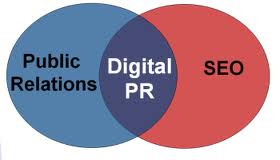
digital PRThe news release is NOT dead. There is no other way to formally announce company news that meets and adheres to traditional journalistic standards.

For those suggesting a news release no longer matters should take a look at whether they have hard news to share.

Start-ups, small-to-medium businesses (SMBs), and even established companies need to use a press release to issue news either online, via the wires, or sent as a pitch by media relations teams.

Blog Post Or News Release? 

More companies are realizing the value of blogging. The blog, like the news release is owned media. You create the message, write the content and publish it, post it or distribute it via many channels.

But, here’s the $5 million chicken-or-egg question — which comes first?

Should a company write a blog post to launch news or should it write a news release to launch news?

A blog post seems like the easiest method to put news out there; albeit, the audience that sees the post is questionable (especially on a brand new blog with zero analytics).

If a company was to launch news of a new product, service or other innovation for the very first time via a blog, then that news is no longer fresh.

A blog is NOT the best place to announce major company news first unless a news release is included in that news strategy with strategic timing.

Here are the steps I recommend, and afterwards I share why: 

1. To launch company news, draft a news release and blog post at the same time.

2. Get the content for each approved via the overall marketing and legal teams at the same time.

3. Set distribution of the news for both the blog and news release at about the same time. A blog post can be scheduled at any time of day.

4. The news release should hit the wires first, and the link to the news release should be included in the blog post just before clicking “publish.”

Rationale For This PR Strategy

If media get wind of a start-up’s news announcement and the company’s blog is the vehicle to share that news, then any attempt at issuing a news release, featuring the same content, and garnering attention is likely to fail.

When media relations practitioners pitch media, a blog post is not the vehicle of choice to inform media of news. It can complement; however, it is not an official vehicle.

Corporate blogs have a variety of authors and topics. To establish the company blog as the official word from the C-suite would take months of consistent writing with on-message topics. Media relations cannot be done via an occasional heavy-hitting blog post.

The news release must prevail first complemented by supporting vehicles with the content emphasized and packed with punch.


 Thanks for reading Soulati-‘TUDE! Blog Post #400! Please subscribe, up and to the right, so you miss no more!


Related articles
  • The News Release Is NOT Dead
  • Seven Expert Social PR Guides and Tips
  • Why Startups Should Invest in PR
Enhanced by Zemanta

Filed Under: Business, Public Relations Tagged With: Blog, Media Relations, Press Release, Public Relations, Social Media

Please Say Thank You In Business

01/15/2013 By Jayme Soulati

thank-youSaying thanks is so simple. Why doesn’t it happen more often? Are brands and people too busy? Or, do they just plain old forget they asked for something?

As a public relations practitioner with a media relations core, my job was pitching media every day for eight hours straight in Chicago’s agencies. I don’t recall if I thanked the reporters for running my story back in the day; but I sure as heck do it now.

When someone works in earnest to reach a reporter and speak upwards of 3-4 times to get a story to run, there’s a bit of professional ‘raderie going on. A relationship gets launched, and someone is asking the other for a major consideration.

If that work is rewarded, it would seem obvious a “thank you” is in order. A simple email would suffice, right?

Last fall a very personable PR woman connected with me about her client’s book. She pitched me the story, sent me a book, and I delayed writing a post on it. With little time to read much around the holidays, I forced myself to dive in gladly as the book was worth the read.

A blog post ensued and another reference followed with tweets and likes, and posts throughout the interwebz. What was the result? The author said, “You’re too kind” on a Google+ post and the PR person is nowhere to be found; no acknowledgment.

I’m not a reporter; I’m a professional blogger with a large community. As a result of that blog post, I helped push sales of that book; probably 10 I can tap from my community alone. In this day of oodles of books and budding authors, I’d say 10 is decent.

I wrote awhile ago about thanking Twitter followers for RTs, something I did up until I joined 25 tribes on Triberr. I couldn’t take the hour a day it would take to thank folks, and that always makes me cringe. When you’re trying to build community, it’s so helpful to acknowledge those who give.

This isn’t a whine or rant.

This is a reminder to everyone in business that the words “thank you” are not overdone, unexpected or unwanted.

Please say thank you in business. It’s more than just common courtesy; it’s the stuff relationships are made of.

My Sincere Thanks

And, with that said, I owe deep gratitude to several business partners who assisted and continue to assist on my nightmare tech journeys:

  • Heather Solos, community manager with Feedblitz, has been a savior helping me rectify Feedblitz issues with my site. Did I bring those issues onto myself? Yep, most likely; that didn’t stop her from sorting through my issues and getting me up and running. Thank you, Heather.
  • Ginny Soskey, is a doll (she looks like one, too), with Shareaholic. I’m using Shareaholic sharing toolbar on this blog and site. I’ve tried many, and each has issues. I’m in love with this tool for bloggers, and the options and variety of sharing features is amazing. They’re getting bigger by the day, but that didn’t stop Ginny from helping me immediately when my share bar went awry. She was on it, learning how to troubleshoot while sending me screen shares and tips on what to fix over here. (Turns out it was Chrome cache; a problem as I had no idea we need to clean our cache on a consistent basis otherwise funky things happen.)
  • Adrianne Mayshar of HubSpot is a gem. She’s been riding herd as lead cowboy (isn’t that word like actor…you don’t need to say cowgirl?) through a serious set of integration issues I’m having and continue to have. I appreciate her customer service and that of senior support tech Victoria.
  • Scott Quillin, of New England Multimedia, has given undying and relentless support and encouragement as well as ears, eyes and dedication to my tech needs. Not only has he designed this site for me, he has become my IT liaison to help free me from the confines of tech nasty. I cannot say enough good about this man and his client service; astonishing.

I thank them; I thank my readers and this community. I thank you. I appreciate deeply.


Enhanced by Zemanta

Filed Under: Business, Public Relations Tagged With: Feedblitz, HubSpot, Public Relations, Shareaholic, Thank you, Twitter

Debating PR: Reactive or Proactive?

04/04/2011 By Jayme Soulati

It was a blog post like this that started it all – that fateful day on the New York Times Small Business Blog when a Long Island haughty restaurateur accused the entire public relations profession of being crazy (no more link love from me). That’s when my guest author Jenn Whinnem responded, and a series was born – What is PR?

A colleague of mine, @DawnComber, who is also a featured Momaraderie, pointed out Adam Singer’s blog post of March 31 and asked my reaction. You see, she’s been watching in the wings and reading quietly without comment as I attempt to corral the Mustangs with a single definition of public relations with consensus. (The grand finale happens this week, after a series of more than 13 blog posts on this topic.)

And, so, to my chagrin, I read Mr. Singer’s blog (link above) post “PR Needs to Shift From Reactive to Proactive”  however I did it in fits and starts.  My blood began to boil in the first graph where I’m told PR practitioners need to “become truly proactive in their approach to the practice; simply, from reactive to proactive.”

I read this to suggest everyone in PR is reactive; we don’t plan, we’re not proactive, and basically we’re tactical and useless.

Next graph written by Mr. Singer: “Media companies are far more proactive than reactive. They plan their content through editorial calendars. Their leadership teams have the executive perspective on content and have a long-term vision with the goal of influencing an industry. They react to news and happenings, but they plan for it.”

STOP.

  • Is Mr. Singer suggesting PR leaders do not have a long-term vision with the goal of influencing an industry? I beg to differ; influencers are our bread and butter; strategic/long-term planning that aligns directly with an organization’s business goals is how we execute against a PLAN.
  • By the way, Mr. Singer, the use of ed cals is a highly tactical and only somewhat strategic approach to planning; you’re suggesting media companies (do you mean magazines?) that use a content calendar should be labeled strategic?
  • How can someone plan to react? PR is often prepared to react, and that’s called crisis communications. Good media relations professionals are always prepared to react to national news so they can tie in their story and pitch media with an associated angle and a hot influencer to help tell the story.

The PR practitioners I know are always prepared for tomorrow’s news, especially those who work in publicity and media relations. That’s why we consume news from “media companies (?)” and social platforms, etc. to anticipate and be prepared for the future.

Next up on Mr. Singer’s blog:

“I’m convinced that public relations practitioners need to flip their thinking. Simply: from reactive to proactive. But only if they can become truly proactive in their approach to the practice. And the 30% of proactive PR most companies and agencies spend in proactive mode? It’s probably wasted.”

STOP ME FROM BEING STRANGLED.

So, finally, I think I understand. Mr. Singer believes there are only 30 percent of companies and agencies (not PR practitioners) that are proactive. I’m not certain a firm or company can take credit for being proactive without a visionary public relations and integrated marketing team leading the way.

“Most PR professionals flirt from opportunity to opportunity.” (Is Mr. Singer implying we flit from or flirt with opportunities?) I’ve not flitted from client to client in years; yet I’m always on the lookout for the next slice of my pie to fill my business development pipeline. Incidentally, “most?” PR people do this? That’s an amazing generality without proof.

We all know that PUBLIC RELATIONS IS NOT JUST PUBLICITY. Perhaps this is where the confusion in this post lies? The breadth of the public relations profession is being boiled and simmered into this singular blog post. The Public Relations profession has been taking a global beating in the last several months, and there are several of us trying to flip that around to prove our value, credibility and status as professional influencers within our respective vertical markets.

I do agree most people need to be more strategic in how they approach business; but, I’m hard pressed to imply an entire profession is tactical and without influence.

It’s blog posts like this that become choke holds on our collective efforts, and it’s so unsettling to me that this post comes from someone within the profession who should know better than to make generalities for thousands of PR practitioners many of them indeed strategic who do influence brand by aligning communications strategy with business goals .

Before I go any further, let me give Mr. Singer the kudos he deserves. Adam Singer works in public relations; he’s a peer although we’ve never interacted before today as far as I know. Here are his credentials I’ve taken from his blog; you can see for yourself:

  • The Future Buzz is the digital marketing and PR blog of Adam Singer, social media practice director for Lewis PR.
  • His blog, The Future Buzz, receives from 30,000 to more than 200,000 unique visitors per month, depending on the type of content he creates (extracted from his blog).
  • More than 7,000 web professionals, marketers, PR people and bloggers/social media users subscribe to Adam Singer’s content via  RSS and email (data from his blog site).

I’m impressed with Mr. Singer’s analytics and blog subscribers; not sure my little one-year-old blog will ever reach those admirable numbers.

Mr. Singer’s blog post rankled me; I’m sensitive after having adopted this journey for more than a month to define public relations and facilitate discussion within the profession. There are so many generalities in this content targeting public relations as a whole that are just false; yet they are stated on an influential blog with 7,000+ subscribers.

Credibility in public relations has always been something we strive for as professionals. None of us need a thorn like this from someone working in our very own profession.

(Image: SEOConsultants)

Filed Under: Public Relations Tagged With: Public Relations

She Says No Need To Define PR for Grandma

03/31/2011 By Jayme Soulati

Davina Brewer of 3 Hats Communications writes a snappy blog chock full of opinion and pizazz. Here, in her comment (with permission) I extracted from my blog post “Should We Define PR for Fifth Graders?” Davina shares her thoughts on this debatable exercise. Thanks, Davina!

Davina Brewer, 3 Hats Communications

Davina Brewer of 3 Hats Communications Says:

1) No we should not define PR or public relations for a 5th grader or grandparent. Not at the expense of oversimplifying or limiting the scope of PR. Yes I spend most of my days in front of a computer; so do lawyers and accountants and therapists and lots of other folks; that doesn’t define what we do, merely illustrates a little of the mechanics of how we do it.

Maybe for this group, we ask “when was the last time a brand or company impressed you and why?” Maybe the company comped a deal, maybe a brand offers extraordinary service, maybe the answer may have to do with an overall branding strategy that includes good PR and then we can reply, “that’s what we do.” But I don’t know many 5th graders, so not sweating it. ;-)

2) We do need to make the meaning of PR more transparent, less oblique. It’s not a bad thing, because the barrier to me is the talent and ability to do it right, to do it well. Not everyone can be a copywriter, design ads, plan commercials, or orchestrate complicated media buys; those concepts aren’t clear but they aren’t vague to the layperson who at least ‘gets’ a little about advertising.

Public relations practitioners can write well, research and identify stories that others can’t; just met with some reporters a couple weeks ago, one mentioned that in a general interview w/ a biz exec it wasn’t until the END of the meeting that he let slip something good, something really newsworthy. Now it was a deal that maybe needed to be under wraps for a while but it also hinted at me that maybe this company needed some media and PR training per so many of these definitions that cover ‘story telling’ and how PR uses that to communicate.

We can identify the different audiences important to a company, how to communicate effectively with employees and investors, how to manage a crisis, how the HR team needs to work with sales, with support, with customer service, which brings me to:

3) We do need to play nice with the other kids in the sandbox. Integration is one of my schticks so while I don’t like defining PR against other aspects of the marketing mix, I don’t mind putting it in context that strategically integrated PR works to support branding, advertising, social media and other promotional activities to help companies communicate with their target audiences. In terms of publicity, it’s earned vs. paid for media; maybe it’s data mining the R&D or customer support departments, figuring out how high the referral rates are, what a great story that is to tell and how it’s best to tell it: ads, social media, events, etc.

I’ve written one post on this, kinda come back to making it relatable. I asked for examples – something in context that yes friends and family can ‘get’ and that clients can understand and appreciate, per their business goals and objectives – but at the end of the day what matters most to me is that:

I know what GOOD PR is.

I k now how to do my job well.

I can effectively educate my clients on what PR is and is not.

I know when the definition of PR is obfuscated or trivialized in the media, it is important to address the error, correct it.

FWIW

Filed Under: Public Relations Tagged With: Public Relations

Should We Define PR For Fifth Graders?

03/28/2011 By Jayme Soulati

Before late last week I truly was seeing the dim light at the end of the tunnel; now I’m not so sure. My journey to define PR with the most recent post “” now has me off on a tangent. At the end of that post, I tossed out a written-in-three-seconds  definition of public relations, but it was this descriptor that prompted many comments.

And, so, we’re here today to try this from yet another angle — should we define PR for a fifth grader, grandma, and anyone else who just doesn’t get what we do?

I just have to say — I’ve always liked it when the rest of the marketing mix didn’t know what it was I did; that way they knew they needed me yet couldn’t do it themselves. It was sort of like a protective barrier, you know?  (But, that was back in the silo days; now we’re all playing happily in the sandbox — well, once we stop fighting over ownership of social media and who !)

And, so, I will provide credit where credit is due and see if the school of thought that says we need a simpler definition for the masses can agree upon nonjargonesque wording to define public relations:

I help my employer build authentic relationships with all of the people who help them either succeed or fail in business. ~,

I tell stories about people; I make people look good. ~,

Public relations builds goodwill among businesses, customers and community using an approach that makes people feel actions and opinions are valued. at

Public Relations is the practice of communicating to the public and other audiences. ~

Public Relations helps people say the right things to the right audiences at the right time. ~ (that’s me)

Public relations (uses technology to) creates relationships with everyone, everywhere. ~Jayme and “like” by of

So, who’d like to start…? (IMHO, this does NOT replace the need to define PR for PR; right Patty?)

Filed Under: Public Relations Tagged With: Public Relations

« Previous Page
Next Page »
ALT="Jayme Soulati"

Message Mapping is My Secret Sauce to Position Your Business with Customers!

Book a Call Now!
Free ebook

We listen, exchange ideas, execute, measure, and tweak as we go and grow.

Categories

Archives

Search this site

I'm a featured publisher in Shareaholic's Content Channels
Social Media Today Contributor
Proud 12 Most Writer

© 2010-2019. Soulati Media, Inc. All rights reserved. Dayton, Ohio, 45459 | 937.312.1363