soulati.com

Digital Marketing Strategy, PR and Messaging

  • Home
  • So What is Message Mapping ?
  • Services
  • Hire Me
  • Blog
  • Presentations
  • Get a FREE E-Book
  • Contact
  • Home
  • So What is Message Mapping ?
  • Services
  • Hire Me
  • Blog
  • Presentations
  • Get a FREE E-Book
  • Contact

Soulati-'TUDE!

PR Strategy For Business: Blog Post Or News Release?

01/29/2013 By Jayme Soulati

digital PRThe news release is NOT dead. There is no other way to formally announce company news that meets and adheres to traditional journalistic standards.

For those suggesting a news release no longer matters should take a look at whether they have hard news to share.

Start-ups, small-to-medium businesses (SMBs), and even established companies need to use a press release to issue news either online, via the wires, or sent as a pitch by media relations teams.

Blog Post Or News Release? 

More companies are realizing the value of blogging. The blog, like the news release is owned media. You create the message, write the content and publish it, post it or distribute it via many channels.

But, here’s the $5 million chicken-or-egg question — which comes first?

Should a company write a blog post to launch news or should it write a news release to launch news?

A blog post seems like the easiest method to put news out there; albeit, the audience that sees the post is questionable (especially on a brand new blog with zero analytics).

If a company was to launch news of a new product, service or other innovation for the very first time via a blog, then that news is no longer fresh.

A blog is NOT the best place to announce major company news first unless a news release is included in that news strategy with strategic timing.

Here are the steps I recommend, and afterwards I share why: 

1. To launch company news, draft a news release and blog post at the same time.

2. Get the content for each approved via the overall marketing and legal teams at the same time.

3. Set distribution of the news for both the blog and news release at about the same time. A blog post can be scheduled at any time of day.

4. The news release should hit the wires first, and the link to the news release should be included in the blog post just before clicking “publish.”

Rationale For This PR Strategy

If media get wind of a start-up’s news announcement and the company’s blog is the vehicle to share that news, then any attempt at issuing a news release, featuring the same content, and garnering attention is likely to fail.

When media relations practitioners pitch media, a blog post is not the vehicle of choice to inform media of news. It can complement; however, it is not an official vehicle.

Corporate blogs have a variety of authors and topics. To establish the company blog as the official word from the C-suite would take months of consistent writing with on-message topics. Media relations cannot be done via an occasional heavy-hitting blog post.

The news release must prevail first complemented by supporting vehicles with the content emphasized and packed with punch.


 Thanks for reading Soulati-‘TUDE! Blog Post #400! Please subscribe, up and to the right, so you miss no more!


Related articles
  • The News Release Is NOT Dead
  • Seven Expert Social PR Guides and Tips
  • Why Startups Should Invest in PR
Enhanced by Zemanta

Filed Under: Business, Public Relations Tagged With: Blog, Media Relations, Press Release, Public Relations, Social Media

Social Media Presents 50 Shades of Wiser

01/22/2013 By Jayme Soulati

Happy Thanksgiving! 65 w dandelions growing! W...

Happy Thanksgiving! 65 w dandelions growing! WTH? via soulati

Social media has not only leveled the playing field for small businesses, it’s enabled professionals of all ages to compete.

If you’re not learning, you’re dead.

The opportunity social media presents for learning is so vast that anyone, regardless of age, who has gumption, passion, and energy can compete with youngsters in a highly successful way. More and more, avatars with gray hair are populating Twitter. I’m making an assumption they are aging gracefully and wiser as a result of social media.

Someone on a Google+ Community posted a suggestion that we should petition Advertising Age for a Top 50 Over 50 instead of the customary Top 40 Under 40 feature. (I concur.)

What prompted this whole post is a short email from a woman I never met or spoke with. She mentioned she was 50+ and was feeling the light dimming on her career path because she was a former print graphics artist. She had little enthusiasm for PowerPoint graphics nor did she know where the road ahead would lead.

…which got me really thinking, and that’s always dangerous.

Mastering what social marketing presents for anyone in the at-large field of marketing communications would take a lifetime and then some. So, instead of saying you’re all washed up at 50, why not re-invent and re-invigorate and get excited about the learnings available for the plucking?

How I’m Reinventing 

I’ve just signed on with Hubspot. Don’t you say a word, internet marketers and digital marketers and SEO folks; I’ve heard enough about your negatives about their poor technology. (I concur, and it’s terribly out of my control.)

I plunked down the money because I know myself. I know that I need to go large to ensure I do what’s required — the lessons, landing pages, website tweaks, buttons, and etc. to make the leads pour in and put my website to work.

It’s called inbound marketing or digital marketing, and it’s an area I’m investing in. Everyone who’s been a loyal member of this community knows I’ve written willy-nilly for three years on this blog. I’ve not needed to care about analytics and blogging ROI. Life has changed, and that’s prompted engagement in a whole different way.

I’m jazzed, nervous, worried, and 100 percent vested in making this thing go and grow. I’m greeting a side of marketing I’ve been circumnavigating.

With each accomplishment, I feel bolstered with energy and excitement about what the future may bring. When I get my first genuine lead in my dashboard I’ll rejoice; when I get my first slice of new revenue, I’ll celebrate and know I’ve made the right choice.

When you hit 50 as a professional, your career is not over; in fact, it’s just beginning. How many companies would relish hiring a mature practitioner at the leading edge of social marketing to guide them strategically?

Fighting Cherry Pits

With that said any of you who thinks life is a bowl full of cherry pits right now (no matter how old you are):

1. You have to find the strength from within and want it.

2. Set your goals and aim high.

3. Take little steps and do it right; earn confidence.

4. Consider obstacles a challenge; find a solution around them.

5. Align with a solid, excellent core team of IT folks.

6. Grow your business by investing when that decision is right for you; you’ll know.

7. Rejoice in each accomplishment, but do celebrate.

If you have any tips you can add about how you feel about getting wiser each year, let me know…this is a topic we may be revisiting soon!


Subscribe to Soulati Smart Stuff and this blog so you don’t miss a thing…it’s right up there to the right!

Related articles
  • PR Interview with Jayme Soulati
  • Get Ready For The Chief Everything Officer
  • Identifying the ROI of a Social Media Community
  • Why Social Media Is A Lot Like Sex
Enhanced by Zemanta

Filed Under: Social Media, Thinking Tagged With: Advertising Age, Google+, HubSpot, marketing, Social Media, Twitter

Brand Engagement And Organic Twitter Followers

01/14/2013 By Jayme Soulati

twitter logo map 09

twitter logo map 09 (Photo credit: The Next Web)

This needs to be said — LOUDLY. Each of my nearing 4,600 Twitter followers is organic; are yours?

Twitter sued five companies in April 2012 that sell followers on e-Bay and elsewhere for increasing exponentially and untruthfully the numbers of followers a peep has. If you’re at all interested, the defense is being represented by an Above The Law columnist. I follow this e-zine, and if the columnists are as adept writing editorial as they are in the courtroom, uhmm, Twitter needs to watch its back. (The companies responded within the last week; my, my, the judicial system takes forever.)

Oprah has 14.5 million; Barack Obama has 21 million; Justin Bieber has 29 million followers. Wasn’t Ashton Kutcher the first celebrity to get 1 million followers back in the day?  Celebrity is the operative word; makes sense.

When I say my followers are organic it means this:

  • I follow people who follow me first.
  • I have never gone rogue to gain high numbers of followers, and many do this with Twitter apps like TweetAdder and TweetBuddy.
  • Having oodles of followers is challenging to manage my stream; when I see content that makes no sense to my topics of preference (like sales junk), I clean out.
  • After four years on Twitter 24/7, I ought to have 10,000 followers by now, right? Perhaps. It’s all in accordance with how you manage your brand in business and how huge you want to get with that extra attention.

Brands And Twitter

That’s a great point (if I say so myself)…should brands get the highest number of Twitter followers possible?


Think about what that looks like to a community, follower, prospect, or customer.

When a brand engages in higher numbers, the first impression is akin to a high Klout score. It’s all about influence. That brand seems to be influential and more followers will come on board.

It’s totally up to the brand how they use that opportunity, though. As I mentioned in my post here about my analysis about Harry and David’s Twitter stream — does your business engage in social media or is it a social business?

Think hard about how you, your brand, your company, and organization use Twitter. This channel is a force to be reckoned with as long as you know what you’re doing — posting, engaging, growing, and being fulfilled with success you measure buoyed by metrics you deem apropos.


Related articles


  • Analysis of Brand’s Twitter Usage Sheds Light On Social Business
  • Why paying Twitter to attract additional followers is a great investment for your business. It’s like Google pay per click 2004.
  • Brands’ Twitter engagement rates seen higher on weekends
  • 5 Influence Platforms to Watch in 2013
  • Does it pay to be honest on Twitter?
  • 102 Compelling Social Media and Online Marketing Stats and Facts for 2012 (and 2013)
Enhanced by Zemanta

Filed Under: Social Media Strategy Tagged With: Ashton Kutcher, Barack Obama, Brand engagement, Harry & David, Justin Bieber, Oprah, Social business, Social Media, Twitter

Analysis of Brand’s Twitter Usage Sheds Light On Social Business

01/08/2013 By Jayme Soulati

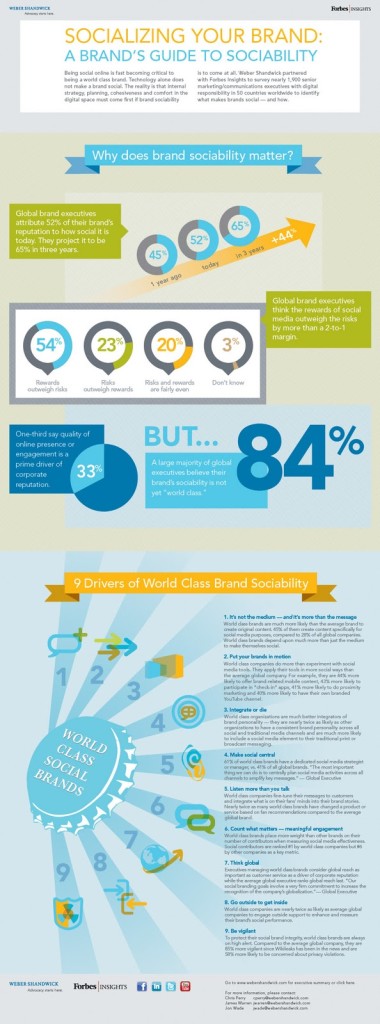
Credit: Social Business Today, 2011

Credit: Social Business Today, 2011

Inspiration for this post came directly from Socialized!, the book by Mark Fidelman on what it takes to be a social business. Not 25 pages into the book, a section entitled “People Are More Loyal to Socially Engaged Businesses,” prompted this ponderance (yep, a word coin) about how well-known brands engage on Twitter.

I’m going to pick on Harry and David, the 80-year-old grower of Oregon pears that has become one of the seasonal faves for online shopping during holidays. I recently thanked them for their wonderful customer service, so I’m a promoter of their brand after being somewhat of a detractor recently.

In this section in Fidelman’s book in which he references a study by Constant Contact and research firm Chadwick Martin Bailey of 1491 consumers 18+ about brand engagement and loyalty on Twitter, he shared:

  • “60 percent of brand followers are more likely to recommend a brand to a friend after following the brand on Twitter.
  • 50 percent of brand followers are more likely to buy from that brand.
  • 79 percent of those surveyed follow fewer than 10 brands, and a whopping 75 percent of Twitter users don’t follow brands at all. “

Fidelman’s interpretation of this data goes like this:

“Depending on how you interpret the data, that can mean either opportunity or difficulty: opportunity in the form of a rich open field of Twitter users who want to engage with your brand or difficulty if most Twitter users don’t want to hear from brands.”

Think about that a minute; I’ll wait.

Harry And David Twitter Stream

After writing a positive blog post about the brand Harry and David and then reading this section of Fidelman’s book, Socialized!, I decided to take a look at the Harry and David Twitter stream to see if that business was functioning as a social business, a social media business, or merely monitoring and being reactionary on Twitter.

Here’s what I found:

  •  From December 17, 2012 to January 7, 2013, there were 47 tweets in the Harry and David Twitter stream.
  •  Of those, 24 tweets were oriented to responses for negative customer experience.
  •  12 of the tweets were positive comments to customers’ experiences.
  •  6 tweets were neutral about customer experience.
  •  5 tweets were actual outbound content relating to product, shipping, holiday deals.

Let’s do a bit of analysis about the Harry and David tweet stream relating to interpretation about being a social business or a socially engaged company:

With the volume of shipments flowing out of the Harry and David distribution centers during the holidays flying to all corners of the U.S. there are bound to be customer service and delivery snafus.

Of the 24 tweets oriented to negative customer service experience, some of the issues were about tardy delivery, frozen fruit, lack of sender identity. Why would consumers use Twitter to report and/or complain about these issues? The Twitter team can’t do anything about that but ask for an email notification so the issue can be routed to the appropriate department.

A tally of only 47 tweets doesn’t indicate that much traffic during this prime time period of holiday deliveries. What that means is the Twitter team (probably also managing Facebook), didn’t have to always be reactionary. The team could’ve scheduled tweets to post during all hours of the day and evening across time zones to share news about deliveries, products, best sellers, donations to charities, storm interference with deliveries, etc.

The stream had few company-generated posts oriented to marketing and sales messages or brand amplification. This was a lost opportunity for the social media team to really boost its presence on Twitter with more than just “sorry you had a negative experience.”

After reading and counting so many “sorry/negative” tweets to make this analysis, I waffled on whether the company had a poor holiday season OR this was par for the course and the company was happy with the 2012 holiday season. I wouldn’t know that, but hopefully the marketing director does.

Tips on Using Twitter For Business

  1. Remember that all content posted on Twitter stays in the stream. Anyone can read posts from past time periods. Mix up the content so it doesn’t sound the same!
  2. There should be approved corporate messages about the company, its products/services, its team, its events, hours of operation, etc. that are scheduled throughout the day on Twitter. These filler posts help keep the brand fresh.
  3. Analyze your company’s usage of Twitter; is it reactionary? Are you using Twitter to respond only to negative customer queries/comments? If so, ensure you mix up the content postings to balance the net promoter scores.
  4. When you’re an online retailer, like Harry and David, with food products, tweet all day long about your favorites and best sellers. Moose Tracks have got to be a best seller next to the pears! Share something about that alongside the good news about mouth-watering sweet pears, for example.
  5. If the social media team is tired and working to maintain the pace during holidays, be sure and switch out some people with a fresher perspective. The tweet stream needs to maintain a liveliness that keeps people’s attention.

Brands have a huge opportunity to make a difference on Twitter. Keep it fresh, post content about the company, respond to customers, and engage new customers, too.

As a final thought, companies are not social businesses yet; many have just now begun to feel comfortable engaging and building communities on a variety of channels.  What’s next is to really look internally to see that all departments are playing together inside instead of functioning in traditional silos.


Related articles
  • Weighing the Benefits and Detriments of Scheduled Social Content
  • Twitter for Business: The Ultimate Guide
  • 102 Compelling Social Media and Online Marketing Stats and Facts for 2012 (and 2013)
  • 12 Most Effective Social Media Automation Tools for Business
Enhanced by Zemanta

Filed Under: Business, Social Media Strategy Tagged With: Chadwick Martin Bailey, Constant Contact, Harry and David, Mark Fidelman, Social business, Social Media, Twitter

What Is A Social Business?

01/07/2013 By Jayme Soulati

socializedEngaging on social media channels with customers and prospects does not a social business make. Being a social business requires this for starters, and more.  Becoming social inside and out by engaging stakeholders at all levels takes consistent effort and clarity from the C-suite to the sales organization and elsewhere.

To really understand how to evolve into a social business from a social media engagement position, I recommend a book authored by Mark Fidelman called Socialized! How The Most Successful Businesses Harness The Power of Social.

I’ve only read word for word through page 40 and became too excited not to share this book for small-to-medium enterprises as well as larger corporations. Its teachings are for all types of business and that includes not-for-profits and academia, as well.

In the first several chapters of the book, my pages are marked up and dog-eared. Mark interviews the experts and authors who’ve already paved the way with tomes on each phase of the social media revolution, and he dots his writings with fodder from executive interviews and his professional experiences with Forbes as the Socialized and Mobilized columnist.

Essentially, what Mark is trying to instill among corporate executives is that social media is the here and now; it’s not going away, and it has forever altered the business landscape of yore. Executives not on board need to be…yesterday.

There are still so many companies grappling with social media, and as Mark puts it so well, “Companies that are ignoring (social media) communities will soon find their customers moving to better neighborhoods.”

Indeed!

Who Needs To Read Socialized! ?

  • Anyone trying to convince a client that social media adoption has to occur, needs to read this book.
  • Anyone in a marketing department having issues earning consensus throughout the organization about a social media deployment strategy, needs to read this book.
  • Anyone who is a social media blogger who wants the most recent research at the tip of the finger to reference in blog fodder or in thought pieces, needs to read this book.

fidelman

So What Is A Social Business?

Everyone has their own definition for their own organization; however, Mark provides a simple explanation – “businesses that have learned the philosophy and strategy of using social technologies to create more adaptive businesses.”

A benefit of being a social business, according to Mark, “provides real-time dynamic feedback from employees, customers and partners… with collaboration and social technologies that make it easy to capture, store, and share organizational intelligence.”

So many businesses today are content having a marketing team with a social media guru leading the charge. Perhaps it’s one or two people who tweet and post Facebook content or maybe it’s an external agency working on social media strategy with one person internally.

That is not what a social business is all about. Mark is clear in his writings about the necessity to have a solid team of seven various experts who manage a different aspect of social media, mobile and intelligence with an internal or external perspective.

The book dives into critical discussion about business culture, developing an internal digital village for employees, engaging externally, provides a strategic social playbook, identifies the social employee, and discusses ROI indepth.

As I continue to read every word in this book, because it is that good, I’ll be writing posts about what I’m pondering. Run and get your copy, and then we can have a healthy discussion below. The really cool news is that Mark Fidelman is everywhere. He’s accessible on Google+, Twitter, Forbes, LinkedIn, and gosh, maybe Pinterest?

Related articles
  • The Risk Of Not Being A Social Business
  • Social Business Trend for Next Decade
  • The Social Business Imperative
  • 8 Tips To Transform Your Brand Into A Social Business
Enhanced by Zemanta

Filed Under: Business, Social Media Strategy Tagged With: Forbes, Mark Fidelman, Social business, Social Media, Socialized!

« Previous Page
Next Page »
ALT="Jayme Soulati"

Message Mapping is My Secret Sauce to Position Your Business with Customers!

Book a Call Now!
Free ebook

We listen, exchange ideas, execute, measure, and tweak as we go and grow.

Categories

Archives

Search this site

I'm a featured publisher in Shareaholic's Content Channels
Social Media Today Contributor
Proud 12 Most Writer

© 2010-2019. Soulati Media, Inc. All rights reserved. Dayton, Ohio, 45459 | 937.312.1363