soulati.com

Digital Marketing Strategy, PR and Messaging

  • Home
  • So What is Message Mapping ?
  • Services
  • Hire Me
  • Blog
  • Presentations
  • Get a FREE E-Book
  • Contact
  • Home
  • So What is Message Mapping ?
  • Services
  • Hire Me
  • Blog
  • Presentations
  • Get a FREE E-Book
  • Contact

Soulati-'TUDE!

Social Media & Global Democracy

02/08/2011 By Jayme Soulati

It took one sentence to prompt this post – “Why ‘21st Century Statecraft’ – the idea that America can use the Internet to influence global events – is more dream than reality.”

I’m going to write first with my immediate stream of conscious reaction to this powerful statement, and then I’ll read the article from which I extrapolate – Bloomberg Businessweek, Feb. 7-13, 2011, “Opening Remarks: The Fallacy of Facebook Diplomacy” by Brendan Greeley.
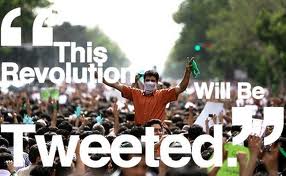
I am bi-cultural; born in the U.S. of a Persian father and mixed-heritage (German/Irish) Midwestern mother. When I lived in Iran as a kid, the country was on the way to westernization aka freedom.  The Shah, weak monarch puppet of the United Kingdom and U.S., was loosening the strict codes and feeding the yen for a democratic monarchy by hordes of students who demonstrated powerfully en masse, and their voices were heard. Educators ruled, and students attended  university in droves with the promise to make a better life and get a ticket to the promised land – the U.S.A.

The Empress basically banned the chador, and women wore the latest Parisienne fashion in short skirts, lots of ruby lipstick, eye liner and shadows with heads uncovered to the chagrin of clerics who believed women unequal and inferior to men (still to this day).

We lived a happy life as children in Iran with no television and no telephone.  We drove an American Chevrolet which was considered high luxury. We had to hire a housekeeper who essentially taught my baby sister better Farsi than she spoke English.

My mom made us peanut butter from scratch, and we loved her homemade pizza, too (our favorite meal). We used foil and straws to make garland for our pseudo Christmas tree (there were no pines in the desert), and Mom bought ornament kits so we could make our decorations.

The hostage crisis in 1979 and revolution thereafter stole those freedoms – for women to attend university alongside men; for students to demonstrate on streets; for women to choose which attire they wore; and something we all take for granted – handholding.  Those events uprooted families throughout the country, and it impacted who I became as an adult.

While attending the University of Wisconsin at Madison, I easily hid my heritage; when asked, my name was of Italian descent.

The most recent elections in Iran a year ago were fueled by social media; the world watched, and the people of Iran took to the Internet buoyed by global support and cheers of encouragement for freedom – all in silence on Facebook, Twitter, YouTube, and elsewhere with people they had yet to and would never meet.

We gave the Iranian people false hope, yet we gave them hope. Then, it was all taken away; the bloodshed a black mark on freedom and the Green Revolution.  Now, we watch and add our tweets, posts and remarks of encouragement to Tunisia, Egypt, Yemen, and other developing nations soon to come.

The desire for freedom fueled by social media and Internet ubiquity is palpable when we engage with emotionally charged activists who bravely tweet and Facebook.  Those who present their true identity on social media are forever tagged by cyber police.

Until you get a flavor of what’s over the mountain, you live comfortably within your boundaries. I understand.

~

Now, let me read Mr. Greeley’s piece and see what he’s intended for his opening remarks to this week’s issue of Bloomberg Businessweek. I offer these direct extrapolations that give credence to my personal musings:

  • “America would take sides by building tools to route around censorship.
  • A country that would deprive its citizens of information, the Secretary of State argued, would deprive them of a market advantage.
  • The dissident who organizes on Facebook, for example, leaves behind a map for security to follow.
  • Facebook is not staffed up to fulfill its new accidental mission.
  • The Internet is American in origin and spirit; it is one of the best expressions of what the nation’s economy, and yes, its government can accomplish. America’s instinctive support for the right to speak and assemble can be hard to square with its need for stability. That’s as true online as it is on the street.
  • We like to make the world a better place, to mold it in our image.”

~

Read the article; it’s well worth pondering. Think once when you meet a global compatriot on social media whether you’re supporting their cause for freedom with hope and encouragement or stoking the flames for what may not be on the other side of the mountain.

(photo credit: sexysocialmedia.com)

Filed Under: Social Media Tagged With: Social Media

Be Everywhere on Social Media, Just Like Gini

02/04/2011 By Jayme Soulati

credit: wholenewweb.com

This post is about Gini Dietrich, a woman I’ve never met, spoken with, hired, been hired by, or referred business to. (She is founder and CEO of Arment Dietrich.) Yesterday, she impressed me so much I have to tell you about it. Mind you, yesterday was not my first introduction to Gini; here’s my full disclosure:

  • I subscribe to her Ad Age Power 150 (and other accolades) Spin Sucks blog via email.
  • When she posts a vlog on YouTube I generally take a look and send a comment in return (have told her she’s the most natural on camera I’ve seen).
  • I first interacted with her on a blog chat for Headway Themes with Danny Brown where she was answering questions about public relations and I was stepping on  her toes alongside (however, I didn’t “know” her then).
  • I tweet her on occasion, and she responds.

So let me tell you why I say you ought to be like Gini (not Mike); she’s everywhere on social media, and if that doesn’t do something for brand and image, I don’t know what does.

  • On Feb. 3, 2011, I first received Danny Brown’s blog post by email and it was on being a CEO, written by Gini Dietrich. In this piece, Gini spoke about how she tried to conduct diligence on how to be a CEO and realized it was up to each person’s style.
  • Spin Sucks arrived in my box, and I watched Gini’s wobbly video taken up and down blizzard-hit Chicago’s Southport Street (my favorite haunt for food, friends and shopping), so I posted a snark about her videography on YouTube (she had already warned us).
  • Then, Sarah Robinson’s blog series arrived via email, “Get Your Shit Together,” and guess who guest authored? Well, Ms. Dietrich, of course.  If you read nothing else from these links, I encourage you to plug in to:
  • Sarah Robinson. I just began to interact with her for the first time this week and stumbled on her blog series; it deserves high kudos. I am incredibly impressed, from merely three days, with her marketing prowess as a coach and her lineup of venerable authorities, herself included, for 28 days this month.
  • Read Gini Dietrich’s guest post on Sarah’s blog series yesterday (link above). It gives an amazing perspective about how she accomplishes all she does throughout the day and still makes time for her husband, exercise, running a company and taking videos with her dog on a snow day all while no longer working weekends.

Wait, I’m not done.

  • Throughout the afternoon, I saw Gini’s comedic banter on Twitter, and I had to insert myself into one thread as she was “fighting” with Les McKeown, Sarah Robinson’s first guest author in her blog series. We four exchanged a tweet or two, and it lent me some laughs for the day.

In a conversation I had with a new Twitter colleague soon-to-be featured on Momaraderie, I learned that Gini had even referred business to Ivonne Vazquez who offers virtual assistant services.

Where I’m going with this is not necessarily what you think (The Gini  Dietrich Fan Club?). It has more to do with whose social media branding and public relations model you might emulate, and I’m suggesting an authority and influencer right here.

While I’ve not engaged on Arment Dietrich’s Facebook page, it exists, and it’s chock full of tips and interactive questions for all audiences. So, she’s got the primary bases covered – an award-winning blog, an interactive Facebook page, a YouTube channel, vlogs on a weekly basis, a Twitter community with genuine engagement, guest posts on other highly acclaimed blogs, and the list goes on although this is just what popped into my purview on Feb. 3, 2011.

It takes extreme amounts of time to make an impression like this. Is my impression measurable? Until I wrote this blog post, I can guarantee Gini, Sarah, Danny, Les, Ivonne, and anyone else had no idea I had even read their materials yesterday as I didn’t post a comment on anyone’s blog (merely the YouTube video).

While public relations practitioners have struggled with measurement our entire lives, this type of social media measurement is absolutely up for grabs, too. Over the course of one day, my silent observations about Gini Dietrich exponentially increased to become an explosion and result of this post. How do you measure that? Kind of reminds me of that archaic advertising rule we learned in college oriented to 9 impressions to begin paying attention and 27 impressions to make a purchase?

My conclusion from yesterday for any of us practicing our professions is this:

  • Social media begins with community and until you create one you’ll not have the opportunity to engage beyond your own protected and comfy confines. Not only does social media require engagement, it also requires listening.
  • The audiences you attract when engaging in social media will run the gamut from students, newbies, peers, competitors, employees, stakeholders, media, customers, and hopefully a business prospect or two to help monetize. When you hold a position of authority, it’s important to respond genuinely to your community because everyone wants a piece of the star.
  • Being prolific is not necessary; being thoughtfully relevant is.
  • The balancing act each of us manages is precarious. Know your own limits and set boundaries. When idle and unproductive engagement happens more often than not, then it’s time to rethink strategy and look at the conversations and with whom.

What other thoughts resonate with you about the Gini Dietrich Social Media Model? And, let me  please remind you of my disclosure above – I’ve never been hired by Gini, spoken with her, met her, or sent business her way. When I see something that needs acknowledgment, then that’s the gift I give.

Filed Under: Branding, Public Relations, Social Media Strategy Tagged With: Social Media

Social Media: Are We Talking To Ourselves?

01/28/2011 By Jayme Soulati

Recently, I wrote a post that received many comments, some supportive, some harsh. I’ve not written my follow-up, though it’s pending, and in the interim, there’s another comment that is so lengthy and insightful in its approach that I’m going to run it as a post today.

Social Media: We’re All Talking to Ourselves spawned thoughts up front, on the side and behind the scenes in many a discussion about whether I was being whiny and needed a swift kick in the pants, or whether I was on to something. The jury is still out because they’re pondering.

I thank, and am grateful to, the genuine remarks presented in a highly professional fashion by Patty Swisher, director of public relations and marketing at IKM, Inc. in Pittsburgh. She read the post and asked me via Twitter whether she could add a lengthy comment to my blog, and that she preferred to email it first to ensure I was accepting of her thoughts. After receiving her email with comment, I immediately picked up the phone (thanked her verbally) and asked whether I could instead use her comment as a full-on post. She agreed.

(I shared this with you to show folks how social media begets amazing engagement. I am inspired by Patty’s reaction and actions today.)

Here is what Patty offered up today; let’s keep the conversation going…who else would like to weigh in with more perspective?

Your post, “Social Media: We’re All Talking to Ourselves,” really hit home with me. I feel the same way. This is much of the reason that I’ve resisted starting my own blog. I recall not too terribly long ago when you started yours, eager and excited and the bumps and hurdles that ensued. I applaud you for your efforts.

I get the sense, daily, that Twitter users (especially) have no interest in “conversing.” They are all about self promotion, although by our own account this is the dirty little secret that nobody talks about.

It’s very much like the “rule” of adding a little personality to your tweets. Really, no. People don’t want to know nor do they care if you have life beyond your keywords. If you mention them, they “unfollow” or quit. The great little program “Qwitters,” offers almost instant proof of this.

I am a “learner” and “relator” by nature – and still a Pisces, I might add despite the latest news reports, perhaps relevant as a “small fish,” but I digress. Gallup’s Strength’s Finder 2.0 reinforces this and tells me so.  Given this, I love reading what people have to say. And I love connecting on Twitter (and Facebook and LinkedIn, among others). I think it’s fascinating to be able to connect with people from Atlanta to Australia with a click, from my desk here in Pittsburgh, or my soft chair in my North Hills suburb.

In addition to avoiding ‘self promotion,’ the social media and “Twitter Elders” have also put out the notion that its “improper” to follow too many more people than follow you. I understand. In dating it’s never appropriate to be too needy or too clingy. But, in my opinion, it defeats the purpose of connecting.

I’m upside down right now following to followers. But, it’s a result of what you speak of, and what Mark Schaefer suggests – it is what I’ve created. When I get bored with my Twitter feed I look for new and interesting people to follow. I get tired of hearing the same old chants.

The good thing is the net is an ocean of information. Again, as Mark suggests (although perhaps a little harsh), if you’re not happy where you’re fishing, move your boat to a new spot.

I know if I had a blog (albeit, well-written and relevant) it would help to increase my relevant followers. But, as a learner and relator, I don’t consider myself an expert. I leave that to the other guys – and there are plenty of them out there. [Plus in daily marcom, to throw in a little jargon, I’m begging for blog/content from our firm’s principals who haven’t signed on to the value of social media yet. More on that later.]

I also agree with your statements about the social media leaders who publish the “most followed” blogs and share the lime lite. I think that’s a natural progression in business, in life for that matter. If you’ll indulge me, in the business sense, think of the product life cycle, there are the ‘firsts.’ Those who see the trend first and can capitalize on it. Then there is the growth stage.  A big build up and growth in a new arena, all of the ‘me-too’ companies or individuals and those who think they can do better. At maturity, the good ones, or maybe the ones who shout the loudest, seem to ‘bubble to the top.’ And this might be what we’re seeing/feeling in the social media/marketing/pr circle right now.

I was doing some list maintenance this week, partially for this very reason. It’s great to share comments and stories with like-minded individuals. It makes us feel good, reinforces that we are right and we do know what we’re talking about even if that last client didn’t hire us or our bosses don’t know it yet.

The other reason I was re-evaluating my lists was to get a better idea of where my interests are heading. The thing I love about social media is that there is something new to learn every day. To me, as a learner, that’s exciting – addictive. So, I’m still learning about using lists and not sure how it will all pan out. Quite frankly, there are not enough hours in the day to read all that I would like to.

While I’m sure there are tons of people out there who are making money and lots of it in social media and they’ve really made a name for themselves as experts, like you, I  don’t think it will ever be the magic bullet for SMB that we’re hoping for.  That’s ok, as long as we set our goals and objectives appropriately.

The other point that I would like to offer you, that I suspect you already know, is that Social Media has become an industry. Not unlike advertising and PR, sometimes a part of it; sometimes on its own. This industry continues to grow and mature and its trajectory has been phenomenal.

My point, to keep in mind, is that other industries are still way down on the learning curve. I can only speak of my own experiences. I’m in professional services as I briefly mentioned above. I’ve been watching it. It’s not bubbling yet, but it’s coming. Like a pot on the stove, the water is heating up but it hasn’t begun to boil yet.

I don’t disagree with any of the comments. Sometimes we all need a kick in the butt!

But thanks for being willing to speak up. I bet lots of people feel the same way.

Filed Under: Social Media, Social Media Strategy, Thinking Tagged With: Social Media

Social Media is Not a Job

11/02/2010 By Jayme Soulati

My fellow tweep and colleague at The SMB Collective, Michelle Quillin, tagged me in a blog post of hers recently. That blog post and a series of others was oriented to social media as a vocation for an intern. In particular, the topic of the post I commented on addressed “what hard-hitting questions would you ask a social media intern?”

What gave me pause was not the questions but the “social media intern” piece. Social media is not a vocation in and of itself. There’s been a bunch of discussion on this very topic, and I’m in the camp of consensus over “social media skills come from expertise derived from public relations and/or marketing.”

I’d never hire an intern to do social media at the outset, and here’s why:

  • Those who are engaging in social media and doing it “well” should have ~two years under their belt. I know for a fact that interns/recent grads may be awesome at texting and Facebooking to friends, but will have little strategy expertise to complement that.
  • Social media skills go hand in hand with public relations and marketing. We in public relations boast heavy expertise on content development and the strategy that goes into that message creation. No intern has that skill set without years of experience.
  • Prior to launching any social media exercise, I step back with a company to ensure a messaging framework is developed, approved, current, and in use. I do message mapping, and I’ve written on this topic in the past here. Tweets, Facebook content and LinkedIn groups need to push messaging that align with corporate communications strategy.
  • Writing skills are rarely taught in school; you’re either gifted and teachable, or these skills come with years of nothing but writing all day. There’s a need for writers out here, and often young people suffer without that skill. Being clever on tweets and Facebook posts (not to mention blogging) is something that builds with time. Grammar, punctuation, spelling, etc. are also musts; because the texting generation is upon us, the lack of quality control in these areas is palpable (I’ve seen it).
  • I appreciate the knowledge a young person brings in areas I haven’t mined i.e. new social media apps, widgets, plug ins, platforms, sites, etc. etc. While it’s good to know about additional channels to piece into a larger strategy, a seasoned practitioner must synch the elements into place.

Is there a recent graduate who knows PHP and WordPress or other content management systems for websites? Now that’s where I’d hire someone on the spot; follow the money, kids!

Filed Under: Social Media Tagged With: Employment, Social Media

Calculating YOUR Social Media ROI

10/06/2010 By Jayme Soulati

Inspiration for blog posts comes from such odd places; I glommed on to this one as it rolled off my tongue on a call. I told a colleague Twitter had saved me from a slow death in a dark office. My love of Twitter is no secret:

A global community of intellectuals

  • New friends with whom to banter and pose odd questions

Information and collections of learning for my professional development

A network of experts on chats, like #SBT10 with whom to ask basic questions without fear and so much more.

My colleague then said, “You be careful, Jayme. I hope you’re making money as a result?” And, I said, “Nope, I haven’t asked. ROI on Twitter isn’t always about money.”

That’s when I realized the nugget for this post. How do you define your social media ROI? Forrester  is selling a report with nearly the exact same title. (Promise, I didn’t know it until seeing the direct e-mail in my box after I wrote my headline and post.)

ROI comes in various shapes and sizes.

My friend Mark W. Schaefer who writes the amazingly successful {grow} blog with a hyper-engaged community states it wisely, “There are many business benefits that come from Twitter. It could be information, competitive intelligence, a new supplier or partner, a deal, a link, or yes, even a sales lead.” (I encourage your perusal of this link to Mark’s blog regarding his post today about the power of Twitter consumers.)

Defining ROI is usually akin to financials i.e. revenue and profit. For me, social media (Twitter and blogging) have always been defined as brand development and thought leadership. One would argue these are metrics… exactly…because return on investment is about measurement via metrics that may not always directly correlate with the bottom line and profitability. 

If you’re a SMB (small-to-medium business), determining how social media influences your business is easier to ascertain, and you can create your own value-based metrics that align directly to your business model and culture.  

How about these as examples:

  • A re-tweet 40 times of a blog post announcing a product or service leads to five inquiries on your Web site. (That’s ROI.)
  • A new person you met on Twitter becomes your next employee because you developed rapport, engaged in conversation over time, and took a chance on hiring. You saved money with no job listings, no recruiters, and communicated directly with the candidate. (That’s ROI.)
  • A blog post written by someone at the company garnered a call by a respected partner in your vertical market interested in collaborating on an upcoming project. (That’s ROI.)

I may’ve backed myself into somewhat of a corner trying to define ROI via measurement values versus dollars, but who are we to tie a bow around a box and define it traditionally? Social media has spawned out-of-the-box thinking and so, too, should it pave the way for  creative definitions of ROI suited to your business.

However, when you’re not the boss, perhaps it’s safer to get out the box with the pretty ribbon?

Filed Under: Social Media Strategy Tagged With: Measurement, ROI, Social Media

« Previous Page
Next Page »
ALT="Jayme Soulati"

Message Mapping is My Secret Sauce to Position Your Business with Customers!

Book a Call Now!
Free ebook

We listen, exchange ideas, execute, measure, and tweak as we go and grow.

Categories

Archives

Search this site

I'm a featured publisher in Shareaholic's Content Channels
Social Media Today Contributor
Proud 12 Most Writer

© 2010-2019. Soulati Media, Inc. All rights reserved. Dayton, Ohio, 45459 | 937.312.1363