soulati.com

Digital Marketing Strategy, PR and Messaging

  • Home
  • So What is Message Mapping ?
  • Services
  • Hire Me
  • Blog
  • Presentations
  • Get a FREE E-Book
  • Contact
  • Home
  • So What is Message Mapping ?
  • Services
  • Hire Me
  • Blog
  • Presentations
  • Get a FREE E-Book
  • Contact

Soulati-'TUDE!

Analysis of Brand’s Twitter Usage Sheds Light On Social Business

01/08/2013 By Jayme Soulati

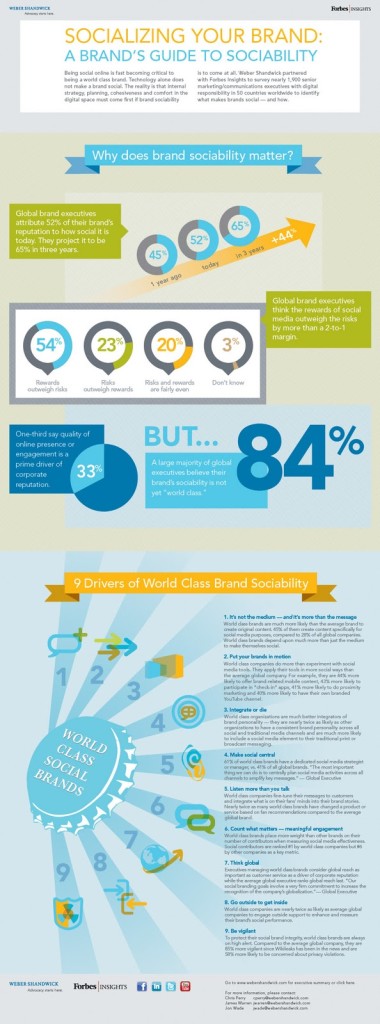
Credit: Social Business Today, 2011

Credit: Social Business Today, 2011

Inspiration for this post came directly from Socialized!, the book by Mark Fidelman on what it takes to be a social business. Not 25 pages into the book, a section entitled “People Are More Loyal to Socially Engaged Businesses,” prompted this ponderance (yep, a word coin) about how well-known brands engage on Twitter.

I’m going to pick on Harry and David, the 80-year-old grower of Oregon pears that has become one of the seasonal faves for online shopping during holidays. I recently thanked them for their wonderful customer service, so I’m a promoter of their brand after being somewhat of a detractor recently.

In this section in Fidelman’s book in which he references a study by Constant Contact and research firm Chadwick Martin Bailey of 1491 consumers 18+ about brand engagement and loyalty on Twitter, he shared:

  • “60 percent of brand followers are more likely to recommend a brand to a friend after following the brand on Twitter.
  • 50 percent of brand followers are more likely to buy from that brand.
  • 79 percent of those surveyed follow fewer than 10 brands, and a whopping 75 percent of Twitter users don’t follow brands at all. “

Fidelman’s interpretation of this data goes like this:

“Depending on how you interpret the data, that can mean either opportunity or difficulty: opportunity in the form of a rich open field of Twitter users who want to engage with your brand or difficulty if most Twitter users don’t want to hear from brands.”

Think about that a minute; I’ll wait.

Harry And David Twitter Stream

After writing a positive blog post about the brand Harry and David and then reading this section of Fidelman’s book, Socialized!, I decided to take a look at the Harry and David Twitter stream to see if that business was functioning as a social business, a social media business, or merely monitoring and being reactionary on Twitter.

Here’s what I found:

  •  From December 17, 2012 to January 7, 2013, there were 47 tweets in the Harry and David Twitter stream.
  •  Of those, 24 tweets were oriented to responses for negative customer experience.
  •  12 of the tweets were positive comments to customers’ experiences.
  •  6 tweets were neutral about customer experience.
  •  5 tweets were actual outbound content relating to product, shipping, holiday deals.

Let’s do a bit of analysis about the Harry and David tweet stream relating to interpretation about being a social business or a socially engaged company:

With the volume of shipments flowing out of the Harry and David distribution centers during the holidays flying to all corners of the U.S. there are bound to be customer service and delivery snafus.

Of the 24 tweets oriented to negative customer service experience, some of the issues were about tardy delivery, frozen fruit, lack of sender identity. Why would consumers use Twitter to report and/or complain about these issues? The Twitter team can’t do anything about that but ask for an email notification so the issue can be routed to the appropriate department.

A tally of only 47 tweets doesn’t indicate that much traffic during this prime time period of holiday deliveries. What that means is the Twitter team (probably also managing Facebook), didn’t have to always be reactionary. The team could’ve scheduled tweets to post during all hours of the day and evening across time zones to share news about deliveries, products, best sellers, donations to charities, storm interference with deliveries, etc.

The stream had few company-generated posts oriented to marketing and sales messages or brand amplification. This was a lost opportunity for the social media team to really boost its presence on Twitter with more than just “sorry you had a negative experience.”

After reading and counting so many “sorry/negative” tweets to make this analysis, I waffled on whether the company had a poor holiday season OR this was par for the course and the company was happy with the 2012 holiday season. I wouldn’t know that, but hopefully the marketing director does.

Tips on Using Twitter For Business

  1. Remember that all content posted on Twitter stays in the stream. Anyone can read posts from past time periods. Mix up the content so it doesn’t sound the same!
  2. There should be approved corporate messages about the company, its products/services, its team, its events, hours of operation, etc. that are scheduled throughout the day on Twitter. These filler posts help keep the brand fresh.
  3. Analyze your company’s usage of Twitter; is it reactionary? Are you using Twitter to respond only to negative customer queries/comments? If so, ensure you mix up the content postings to balance the net promoter scores.
  4. When you’re an online retailer, like Harry and David, with food products, tweet all day long about your favorites and best sellers. Moose Tracks have got to be a best seller next to the pears! Share something about that alongside the good news about mouth-watering sweet pears, for example.
  5. If the social media team is tired and working to maintain the pace during holidays, be sure and switch out some people with a fresher perspective. The tweet stream needs to maintain a liveliness that keeps people’s attention.

Brands have a huge opportunity to make a difference on Twitter. Keep it fresh, post content about the company, respond to customers, and engage new customers, too.

As a final thought, companies are not social businesses yet; many have just now begun to feel comfortable engaging and building communities on a variety of channels.  What’s next is to really look internally to see that all departments are playing together inside instead of functioning in traditional silos.


Related articles
  • Weighing the Benefits and Detriments of Scheduled Social Content
  • Twitter for Business: The Ultimate Guide
  • 102 Compelling Social Media and Online Marketing Stats and Facts for 2012 (and 2013)
  • 12 Most Effective Social Media Automation Tools for Business
Enhanced by Zemanta

Filed Under: Business, Social Media Strategy Tagged With: Chadwick Martin Bailey, Constant Contact, Harry and David, Mark Fidelman, Social business, Social Media, Twitter

Twitter’s Demise Or Ascension?

12/18/2012 By Jayme Soulati

twitter fail image

twitter fail image (Photo credit: Wikipedia)

As a self-professed Twitter-holic since early 2009 in a 24/7 pattern, I know and whine about the changes to my first-love social media channel. When Google+ launched Communities Dec. 12, 2012, Twitter was a veritable graveyard. These days, the stream is littered with retweets of others’ content. Instead, I strive to post personal messages or say good morning to someone missing from my columns on HootSuite. In fact, last week I suggested we’d need to work harder to keep Twitter viable instead of it becoming a re-posting only channel.

What’s your view of whether Twitter can survive other channels’ apparent popularity? According to The Wall Street Journal, Twitter only has 140 million registered users, dwarfing that of other channels (remember Facebook’s news of 1 billion this summer?). Can Twitter survive?

News on December 17, 2012 in The Wall Street Journal suggests a resounding yes! “Now On Twitter: Holiday Shopping Deals,” is all about big-box retailers flocking to Twitter to share Black Friday and holiday gift-giving deals. Among them are Best Buy, Wal-Mart, Target, Macy’s, Kohl’s, Radio Shack, and Toys ‘R Us.

Great article about the purchase of sponsored tweets by Best Buy and its use of Twitter “parties,” hour-long Twitter chats about gift ideas for target shoppers like moms and fitness buffs.  Best Buy and its peers did not disclose to reporters how much their collective ad budget was; however, when you read the piece, it’s heartening to see that Twitter is finally getting some respect:

Marketing brand strategists prepped Best Buy retailers in various markets in advance with holiday-marketing planning sessions.

Eight weeks of Twitter attention was launched prior to Thanksgiving and is still going on during this especially zany last-minute shopping week for Best Buy.

A more creative strategy was launched other than just tweeting all day long with an inside-out perspective. Best Buy targeted shopper demographics and held 60 minute Twitter chats (there’s probably a hashtag out there somewhere) to engage peeps about gift giving.

Here’s the coolest thing about what’s happening on Twitter that the Best Buy brand strategist learned from his location-based retailers – tone of voice and authenticity were critical to the success of the campaign.

I absolutely love, love this. We on Twitter, engaging all day long for years, know the power of authentic voice. We know which brands are real, which ones care and which ones are one-way (inside out). For brands to get Twitter, they need to appoint a solid and seasoned team on the frontlines that can engage appropriately and with authenticity. When they invest in that way, the return on investment comes back in spades.

Related articles
  • HootSuite CEO: How Kohl’s Won the Twitter Wars
  • Join Us for Our Best Buy Gifts That Do Twitter Party on Saturday
  • Advertising on Twitter: Is it right for your brand?
Enhanced by Zemanta

Filed Under: Social Media Tagged With: BestBuy, Brand, Facebook, Google+, HootSuite - Social Media Dashboard, RadioShack, Twitter, Wall Street Journal

Then We All Flocked To Google+ Communities

12/12/2012 By Jayme Soulati

Google ?????Google Refrigerator?

Google ?????Google Refrigerator? (Photo credit: Aray Chen)

It’s been a fantabulous 10 hours since I launched my first Google+ Community, Bloggers Unite! in about five minutes yesterday (with 46 members as of 11 p.m. last night).  Didn’t check on a name or worry about what it was going to be for or about…just did it…you know Nike made me do it.

I had to jump in right quick as my peers were inviting me to their communities like crazy, and I saw one already had 150 members…so, there I was not to be left empty handed and voila…another social network, just like all the other holes in my head.

But, it was an exciting engagement sort of day – Google+ was hopping, and Facebook and Twitter were tres dead! Bloggers were posting articles about the new Communities all day, and everyone was joining (after I mistakenly sent an invite to an entire circle and didn’t know it)!

So, what is a Google+ Community?

It’s another place to post and engage and banter or be serious (I’m tired of being serious). Actually, no one really knows. The rules will get made as we go and grow; I’m no longer worried about it. People can ask the serious questions or pose the banter sillies I’m seeing a lot of, too.

I’m loving the feel of these pages much more than Facebook; in fact, it’s cleaner and more fresh.  Someone asked me on Twitter which community I thought looked good to join, and I said, “hang 10.” No one really knows what they’re doing yet and everyone is joining one another’s communities, so the jury is out until the content rolls in. My advice to most is to sit back, watch, listen and enjoy the fun. You can decide in about a week who’s on first.

Is it just another engagement platform?

Perhaps, but I want to see for those moderating a community how much link love and SEO juice they may get being all over the Community with responses and posts. There’s got to be some benefit with all that activity. My sense is that every morning someone can come post their blog link first thing in the community and then get more shares.

A few other folks said they wouldn’t accept my invite because they were feeling overwhelmed and didn’t want to do anything they couldn’t do well. Don’t be too worried about being serious about this until you have to get serious. I’m thinking some good stuff is going to come out of this, and you know why?

Google+ has not been peeps’ first channel of adoption. It’s cleaner without all the cousins, nieces, family members, ex boy friends and childhood voyeurs clogging up the stream. It’s about business, and it’s still new. Google did an amazing job creating this hub-bub, and people fell for it hook, line and sinker.

Still on the fence? Don’t be…flock to Google+ just like we all did within the last 48 hours. See you at Bloggers Unite!  Ask me for an invite; you’re already in!

Related articles
  • Setting up Google plus communities – what you need to know – SEOptimise (blog)
  • 4 Things You Should Know About Google+ Communities
  • Google+ Communities: The Last Nail in Facebook’s Coffin
  • A New Flood of Connections
Enhanced by Zemanta

Filed Under: Social Media Strategy Tagged With: Facebook, Facebook features, Google+, Nike, Search engine optimization, Social network, Twitter

Fixing The Social Media Plateau

12/03/2012 By Jayme Soulati

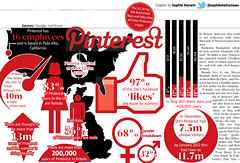
Pinterest featue in Metro - 27th February 2012

Pinterest featue in Metro - 27th February 2012 (Photo credit: Great British Chefs)

There’s a social cultural shift on the ‘sphere and the ‘webz; have you felt it? More’s the question…are you experiencing a social media sea change plateau yourself?

Many in my community have been on this social engagement and blogging journey for an average of 18 months. For me, it’s almost four years.

When you look at that timeframe doing almost the same thing day in and day out, it’s time to grow or die.

The signs below may be an indication it’s time to step up your game, take it to the next level, and grow or remain complacent. See if these strike a chord and whether you might add a few of your own:

10 Indications You’ve Hit a Social Media Plateau

1. Learning new things becomes more rare; another 20 ways to use Pinterest blog post isn’t providing new insight over what you know now.

2. Your favorite bloggers seem to be echoing the chamber more frequently, and there’s a reason you’re spotting that — you’re ready to grow because you know.

3. Posting wit and banter on the channels is more of a chore and you find yourself sharing posts without reading to keep your Klout score up.

4. Facebook’s continued alterations and altercations have you yawning as you realize other channels may be a better fit.

5. You read some of the posts and shake your head at the nonsense.

6. When you find a new blogger with some awesome content and you write a comment saying so and get crickets in response.

7. When you see a favorite blogger MIA or changing it up so drastically you can’t follow whose writing you’re reading.

8. When whining becomes more the rant and a feeling of morose amplifies emotions in posts.

9. When the Triberr stream is populated with content that boils down to limited scope, repetition and topics you’ve seen already a dozen times.

10. When the road ahead is a question mark.

How To Fix The Social Media Plateau

Not saying you need to feel all of these or any, but when you begin to question your purpose and experience a few of those listed above, consider these possible solutions to fix The  Social Media Plateau:

1. Take a hiatus and refocus on your core business. You’ll buy back tons of time; yet, your social brand will suffer.

2. Reduce the time spent on the channels that don’t return much to you. That way, you’re not spread as thin.

3. Guest post on national blogs or other more high-traffic blogs (only after you engage and make a connection with the bloggers’ community, of course).

4. Tackle a whole new area, which can be any or all of the following — web design, analytics/big data, content marketing and lead gen, podcasting, webinars, passive income, affiliate marketing, speaking, e-books/books, and, and, and…

OMYGOSH…look at #4 — there’s my laundry list to push the envelope and avoid a social media plateau! What about you? Did any of that tickle the pink?


Related articles
  • Credibility In Social Media
  • Fortune 500’s Reach a Social Media Plateau According to Annual Benchmarking Study
  • Social Media for Charity – A Way for Small Businesses to Give Back
  • Is Social Media Reaching a Plateau in America’s Largest Companies?
  • Why do you waste time on social media?
  • {grow} | Your 2013 social media strategy: Grow a pair.
  • 100 Ways to Engage In Social Media
Enhanced by Zemanta

Filed Under: Social Media Strategy Tagged With: Blog, Business, Facebook, Klout, Pinterest, Social Media, Twitter, Web design

First Blog Post: 15 Tips for New Bloggers

11/11/2012 By Jayme Soulati

Keeping up with my Sunday pattern of posting one from the archives, this post below was one of my very first written March 22, 2010. Upon reading it, I’m impressed this list still has merit nearly three years later…what tips might you add based on your own blogging journey? Lastly, how about publish your “First Blog Post?” (Still relevant and well written?)

From Soulati’-TUDE! Archives:

Now that I’m officially a blogger, it feels pretty cool. I’m eager to put all the back-end stuff behind me and concentrate on perfecting and building the network. Unfortunately, I need to dig deeper for the patience as it’s all part of the larger journey.

In spite of my short time here, there are tools a newbie blogger needs to stay the course. Let me suggest several based on direct experience in the first two weeks:

  1. Patience and Perseverance. Without high levels of patience, a new blogger cannot persevere.
  2. Tech Know-How. IT knowledge is not a necessity, although it’s a bonus. Some of the more daunting areas are installations, code, ftp, renaming files, creating databases on c-panel and so much more. When self-hosting a WordPress blog, be prepared to be frustrated.
  3. Know your limit. Hit a wall? Ask for help; hire the experts. I didn’t, but needed to. (I had hit my wall, but a guy on Twitter blew me off for a week, and it angered me so much I insisted on doing this myself.)
  4. Time. Blogging requires more time. Obstacles and snafus galore and solving each take precious hours. See number two.
  5. Listen at a higher level. When speaking with clients, colleagues, friends, peers, listen for the next blog topic. After any conversation, if something strikes you, jot down key words to trigger topics.
  6. Keep a notebook, folder. Keep the notes, posts, items you read in a manual notebook or desktop folder.
  7. Rip tear sheets. Familiar with this term? Public relations practitioners use it when one of our stories we’ve placed hits. Get oriented to tearing out stories and filing into an idea folder. I’m already tearing sheets from Advertising Age, BusinessWeek and the Wall Street Journal which offer an array of ideas.
  8. Follow and subscribe. No better way to get post ideas then to follow people on Twitter lists via or . Subscribe to blogs in a reader. That way when on the road, you can access posts galore and delete subscriptions not making the grade.
  9. Use a dictionary/thesaurus. There’s nothing like a good dictionary to help find the right word or look up a synonym. Each post I’ve written has required reference to the dictionary. I’m expecting a few grammar lessons along the way, too.
  10. Be aware. Being aware is more than just combing content for ideas. Curiosity is the first step towards greater awareness. Surf 10 minutes daily on Technorati and get a sense of topics, style, and popular bloggers’ content. With awareness comes relevance.
  11. Engage on Twitter. A blogger must have a Twitter account, but all tweeps don’t have a blog. Twitter is the first best marketing tool for a blog; it’s a built-in audience who already finds you credible enough to follow. Blog posts are first promoted on Twitter. Whether you include Facebook in this marketing scheme is up to how you use it (friends/family or mix of business).
  12. Be responsive. When you post, the objective is to get attention. The ultimate goal is to get comments and furthermore subscribers. Answer everyone with appreciation who takes time to jot a note.
  13. Queue the posts. It’s Sunday morning. I’ve written 3.5 posts. Am thrilled to have something in queue for the week. Find that quiet time to draft skeleton content. Come back to it and edit. Find support points from the Web to empower the message.
  14. Learn! Already after a solid week of blogging, I’m thrilled with learning opportunities. While I thought Twitter was wonderful, blogging beats it hands down. I now look at everything through the blogging glass…is this a good topic? Is it a trend? Where can I find the data to support this statement? Do I need to back up my opinions? Shall I link to that site? Should I self-promote the blog on another’s post? Does this content resonate? Who cares?
  15. Respect one another. Everyone is entitled to opinions. It’s what makes the blogosphere rich. Set a positive tone with the goal of garnering respect.

What might you add to the list, please?

Related articles
  • Bloggers.com a Network all Bloggers Should Join
  • Mumsnet bloggers converge on London
  • 6 techniques to improve your SEO social indicators

Filed Under: Blogging 101 Tagged With: Blog, Facebook, Online Communities, Social networking, Technorati, Twitter, Wall Street Journal, WordPress

« Previous Page
Next Page »
ALT="Jayme Soulati"

Message Mapping is My Secret Sauce to Position Your Business with Customers!

Book a Call Now!
Free ebook

We listen, exchange ideas, execute, measure, and tweak as we go and grow.

Categories

Archives

Search this site

I'm a featured publisher in Shareaholic's Content Channels
Social Media Today Contributor
Proud 12 Most Writer

© 2010-2019. Soulati Media, Inc. All rights reserved. Dayton, Ohio, 45459 | 937.312.1363