
soulati.com

Digital Marketing Strategy, PR and Messaging

  • Home
  • So What is Message Mapping ?
  • Services
  • Hire Me
  • Blog
  • Presentations
  • Get a FREE E-Book
  • Contact
  • Home
  • So What is Message Mapping ?
  • Services
  • Hire Me
  • Blog
  • Presentations
  • Get a FREE E-Book
  • Contact

Soulati-'TUDE!

10 Reasons To Attend Social Media Conferences

04/08/2013 By Jayme Soulati

Amy-Howell-Jayme-Soulati

Amy Howell of Howell Marketing w/ Jayme Soulati of Soulati Media

It’s the Monday after Social Slam, the Knoxville social media conference brainchild of Mark W. Schaefer of {grow}. I have attended three years running, spoke at the first, was a VIP at the second and attended “normal” the third.

You know what? It makes no difference if you attend a conference as someone special (depending on whose eyes are looking) or just yourself. You need to just attend already.

The energy, enthusiasm, ‘raderie, learning (yes, you’re bound to learn at least one thing or two), sisterhood in social are quite intoxicating. Here is my need-to-post-something-quick round-up of why you should attend social media conferences on this scale especially:

1. The chance to meet peeps face-to-face elevates relationship. It’s called relationship marketing (if you have to put it in those terms), and it’s amazing for your psyche.

2. Bloggers and peeps you Skype want to see what you look like and make that connection with a hug, laughs, a photo for the Wall of Fame, and a Facebook or Instagram post or two.

3. You get a Klout bump…ooh, did I say that; the channel everyone loves to snark about? Yep, I did…my score bumped 3 points sitting at the conference tweeting all the trending content from the conference.

4. You can learn. So many people are afraid to invest in tradeshows in fear of “I won’t learn anything.” Au contraire. The ticket price for Social Slam to register is still less than $100; the hotel is about $125; gas for a tank is about $50, and you can eat for $12. It was a sum total of less than $300 to participate, and it’s entirely a business expense.

5. Meeting the community is priceless. Enough said.

6. Ideas proliferate when slammed with that much information all day long; no kidding. You listen, you watch, you nod your head, you shake it in confusion, you get a book signed, you see a young upstart with such drive you want to be him (Christopher Craft, chief visionary of Nao Media); you chat with total strangers on an intellectually strategic level; you solve the world’s problems; you have immediate access and shoulder bumping with every single speaker on stage; and, you take video (watch this space for Soulati Media On The Street from Social Slam!) of one another engaged in all levels of business ‘raderie.

7. You get blog fodder; yes, lots of it.

8. You are inspired to create new products and services in your own business because of the ideas presented by John Jantsch of Duct Tape Marketing and featured in his new book he autographed, The Commitment Engine, Making Work Worth It.

9. You fuel your social media channel with peeps you’ve only met via avatar and 140; and you compare notes on who’s not there with a little gossip behind the scenes.

10. You build your brand and earn new followers and blog readers and respect for what you’re doing in social as a leader, and you realize just how great it truly is to be in this sector building roads for those on which to travel.

Don’t ever think you’re too jaded or knowledgeable that you shouldn’t attend a social media conference; there is always someone to meet the first time, hug in renewal of relationship, and vow to connect with on a deeper level. Your own inspired creativity requires this type of engagement; the cost is well worth the challenge of leaving the office.

Thank you Social Media Club Knoxville and all the faculty, planners, originators, emcee, attendees, and sponsors for making this show one I will always attend in whatever capacity I go.

Attend the New South Digital Marketing Conference, May 17, 2012! Jayme Soulati is on tap as a presenter!

Related articles
  • Hundreds turn out for Social Slam
  • 50+ huge ideas from #SoSlam
  • One Social Media Conference You Don’t Want to Miss
  • Six Ways Internet Marketing Meets PR Online
Enhanced by Zemanta

Filed Under: Social Media Tagged With: Duct Tape Marketing, John Jantsch, Klout, Knoxville Tennessee, Mark W. Schaefer, Social Media

9 Tips From College To PR Agency

04/03/2013 By Jayme Soulati

English: Crouse College, Syracuse University.

English: Crouse College, Syracuse University. (Photo credit: Wikipedia)

To say the transition from college to career is easy would be a lie. This new life chapter is rewarding and also a challenge.

Right after graduating from Syracuse University, I took an internship with a PR firm in New York City merely one month later. Within three months, I was hired full time and moved into an apartment. Luckily, my best friend moved came to New York shortly after me; it was comforting to have a small slice of college during this professional transition.

Now that I’m approaching my one-year anniversary as a NYC resident and Stuntman PR employee (June 18th!) I’m much more settled. After spending 2012 sorting out chaos, I resolved to settle into a healthy and happier routine in 2013.

Tips From College To Work

1. Exercise. The first step I took was joining a gym. It had been months since I had really exercised and I knew it would provide a calm I seriously needed. My gym has great group fitness classes so I started going to yoga. I know yoga isn’t for everyone but it has been such a peaceful and necessary thing for me. After a long, stressful workday, it feels great to get a bit of exercise in and let my mind relax for a short while. It’s really a sanctuary for my mental health.

2. Work Hard. Being the low-man on the totem pole, I have a lot to learn about PR. Thankfully, I work in a very small agency and get to work closely with PR professionals who have been in the industry for 10+ years. It’s a fantastic opportunity to be able to learn from them and I will always be the first to advocate for interning or starting your career at a small agency over a large one. There are few things more satisfying that landing a great placement and impressing or gaining your boss’s praise, but that doesn’t come without dedication and hard work – something I am constantly reminding myself of.

3. Keep Learning. I rededicated myself to continuing my education after college. I had taken a social media class my senior year and didn’t want to forget what I had learned or lag behind the ever-developing industry. A few weeks ago, I attended a seminar during Social Media week. After so many months out of college it was great to be back learning from experts in my field and working toward making myself a better PR professional.

4. Stay Connected. During my refocusing, I realized I had grossly lost touch with social media as a means of learning and connecting. I had used Hootsuite during my social media class at Syracuse, and I’ve made it a point to always keep a tab with Hootsuite open and continually monitor my news feeds throughout the day.

It’s been a long ride (though it feels like time has flown by) but I’m excited about the positive changes and challenges facing me personally and professionally. I don’t think I’ll ever have all my ducks in a row but it’s been a happy struggle trying to.

5 Tips For Young Professionals

1. Breathe and relax. Find something that calms you and let yourself forget about the stressors of your day.

2. You’re most likely in an entry-level position and will have to handle certain tasks that aren’t interesting or don’t seem important, but always take them seriously. Doing your work well and efficiently will impress your bosses and earn you a promotion or more responsibility.

3. Work hard, play hard. It’s a common saying for a reason. It’s great to work hard and impress your boss and achieve career goals but balance is essential so you don’t burn out.

4. Seek opportunities to grow as a PR professional and expand your skills. Attend seminars or workshops to stay up to date on the latest trends and advancements in the industry. Blogging, whether you start your own or guest blog, is a great way to continuously fine tune writing.

5. Network. Stay connected with peers from college; they may be able to help you with your job search when you’re ready to move on to another company or can introduce you to more great connections. And of course, always try to be making new connections with professionals who have been in your industry longer than you. They’re an amazing resource for advice and in my experience have always been willing to help you succeed.

About The Author

Alyssa Dupre is an Account Coordinator at Stuntman PR and a recent graduate of Syracuse University. She happily lives in Brooklyn but still wishes it were London where her heart has resided since she studied abroad in the spring of 2011. Connect with her on Twitter @ASDupre.


Related articles
  • 9 phrases PR firms hate to hear
  • 10 Google+ Communities for PR Pros, SEOs and Social Media Experts
  • Scott Meis: 4 Tips for College Grads Targeting Digital Marketing Jobs
Enhanced by Zemanta

Filed Under: Public Relations Tagged With: HootSuite - Social Media Dashboard, Public Relations, Social Media, Syracuse University

Q & A With Journalism Professor @ProfKRG

03/26/2013 By Jayme Soulati

In this Q and A between Jayme Soulati and Assistant Professor Kenna Griffin of the Oklahoma City University Mass Communications Department,  you will see what’s changed and what hasn’t about the world of writing and reporting in today’s social engagement era:

KennaGriffinSoulati Q:   How long have you been a professor in J School (journalism school for all those not in the know)?

I began teaching in the mass communications department at Oklahoma City University in Fall 2003. I teach primarily journalism, although I also teach media law, media ethics and public relations courses. I also advise the university’s student publications staff.

Soulati Q: What are the basics in the curriculum students must have to graduate?

Because we are a pure mass communications program, all students take certain courses (introduction to mass communications, mass communications research, mass media law and ethics, and a senior capstone). The students then choose a track area—print journalism, broadcasting, advertising or public relations— to study. Most of our students study in more than one track area, which helps to make them more well-rounded in the job market.

Soulati Q: Are you seeing an influx of people entering J School or a decline in the numbers in the last five years?

Honestly, we have seen a decline. However, that has not been the experience of other journalism schools in our area. The economy has resulted in us, a private university, seeing an overall enrollment decline.

Soulati Q:  How has social media influenced how you teach journalism now?

Social media has completely changed the way I teach journalism. The Internet as a whole has leveled the playing field for journalists. We no longer have to wait for the next publication cycle to provide our audience with the information they need and want. We can report news in real time for the first time ever.

Soulati Q: Is there a social media track in J School or is it woven into courses?

Social media has become part of every course we teach, from News Reporting to Mass Media Research. I, personally, only teach one social media specific course, which is Social Media Marketing and Online Promotions. The class is cross listed between the mass communications department and the business school. The students enrolled typically are studying journalism, public relations or marketing. The course’s purpose is to teach them to create a strategic, measurable social media campaign for an organization, instead of the all too common approach to “use social media.”

Soulati Q: What’s your view of how journalism will continue to evolve based on how things stand today?

It’s interesting to hear people saying that newspapers are dying. I’m not convinced that this is the case or that it even matters. We know people are seeking out and consuming more information than ever before. Therefore, the need to give them factual information via the platform of their choice is in high demand. It’s been 30 or 40 years since there’s been a more exciting time to be a journalist!

Soulati Q: What are 3-5 tips you can offer writers seeking a career in journalism?

– Learn the fundamentals of our profession. Understand what makes someone a journalist as opposed to just another person with a keyboard.

– Focus on the basics. Recognizing news value, gathering information through interviewing sources, using AP Style and the inverted pyramid… these are basic skills of journalism that lay the foundation for your career.

– Be adaptable to change. The basic skills stay the same, but the delivery platform changes every day. Get excited about the possibilities of new, different ways to deliver information.

– Take advantage of all presented opportunities. I’m amazed by the students who don’t attend networking and training events. I know you’re busy. We’re all busy. But you have four years to fit in as much learning as you can. What you do in that time will determine to some extent your success afterward. Take advantage of every opportunity presented to learn more about journalism and to hone your craft.

– Network like it’s your full-time job. I don’t agree with the idea that it’s not “what you know, but who you know.” Success actually is a combination of both. You have to understand journalism more than you understand most things. Then, you must position yourself for career advancement. This means meeting people and helping them understand what skills you have that benefit them.

Soulati Q: Is everyone a writer?

Everyone can be a writer, but it’s more difficult for some while being intrinsic to others. Anyone can become a writer, but not every writer is a journalist. Journalism is a profession that requires training, an understanding of professional values, norms and routines, a method for practical application of the craft, and a network of others serving the profession. Simply having a platform or being able to form a sentence doesn’t make you a journalist. A journalist is more than someone who strings together words to form a sentence.

Soulati Q: Is there a career in this profession, or are you seeing it erode from the academic perspective? 

There are more jobs available in journalism than there are professional journalists to fill them. This is one of the key reasons I started posting a weekly list of media jobs. You can read more about that here.  The short answer is yes – journalism is a viable, thriving profession.

Soulati Q: Should students of today insulate their journalistic career with other skills besides news or feature writing?

Absolutely! Anyone in media that puts on their blinders to multimedia or even public relations aspects of the industry is just begging to be extinct. Being a good writer still is a critical skills, but it can’t be the only tool in your professional arsenal.

Soulati Q: Has social media broadened the scope of opportunity for students and young professionals today?

I think it has. Of course, I’m a lover of social media. I see two critical ways social has broadened opportunities for students. First, social media have created a whole new genre of exciting career opportunities in content promotion and community management. Second, social media allow students to create and maintain a professional network that will serve them well throughout their careers. This network is no longer bound by geography or professional, institutional hierarchies. You want to network with the CEO of an organization where you want to work post-graduation? Follow him/her on Twitter and start the conversation immediately.

Soulati Q: Do have any further sage counsel to share for anyone reading?

Change is frightening, but it won’t kill you. In fact, I’m pretty sure some have said it makes you stronger. What’s your purpose as a journalist? Focus on that. Everything else is just changing tools that allow you to do your job. The method is not the meaning.

About The Author

Kenna Griffin (@profkrg) is the blogger behind www.profkrg.com, which aims to create an ongoing educational dialogue between professional journalists and media students and educators. In her spare time she teaches journalism, multimedia, public relations, media law, and media ethics courses as a full-time university professor. Oh, and she is a doctoral candidate in mass communication on the side.


Related articles
  • Convergence is changing the face of journalism
  • Six things new journalists need to know when trying to get a job
  • Do Powerful Brands Use Heart?
  • 10 Reasons Why News Releases Are Smart PR
Enhanced by Zemanta

Filed Under: Public Relations Tagged With: Journalism, Journalism school, Mass communication, Oklahoma City University, Social Media, Twitter

10 Marketing Tips To Make 6 Minutes Of Fame Longer

03/11/2013 By Jayme Soulati

baconSouth By Southwest or SXSW is happening right now. I will attend some day; it’s on my list. What happens there? Do companies become famous overnight and do videos of feats go viral? It’s been known to happen.

Have you ever thought about what happens after six minutes of fame?

I was in the audience for the Jenny Show in Chicago once; they asked me a question about being single in the city and I was on TV. It wasn’t for six minutes; more like six seconds…and what happened next? Nothing. It was a big let down after my stint on camera wearing a stupid grin because when you frown on TV you look like a convict.

Remember those streakers who ran nudey through the Sunday football game or the collegiate games? Bet they got more than six minutes of fame; probably a mug shot and criminal record for showing items that should always remain covered.

How To Make 6 Minutes of Fame Live Longer

It seems to me, as an over-the-top consumer of news, that companies are trying really, really hard to earn six minutes of fame. Social media has done that. Everyone is hungry for word-of-mouth marketing to up the ante and boost their brand into the stratosphere.

The Super Bowl comes to mind, especially when there’s equipment (aka clothing) failure. Advertisers who spend millions of dollars are expecting infamy.  The Old Spice commercial still engages the sexual energy; yep, definitely more than six minutes of fame. The video I featured here by the guitarist for the Chicago Music Exchange who played 100 riffs on the history of Rock ‘n Roll certainly went viral, but I can’t tell you the guy’s name.

Fame is fleeting, Folks.

What Marketers Can Do For Fame and Fortune Every Day

Instead of worrying about how you’re going to capitalize on a fad, trend or current event, consider the following to be famous every single day, not only for six minutes:

  1. Keep your messages updated; adjust them as your company grows with the times.
  2. Change up the team every now and again; hire a fresh perspective to give new eyeballs on current marketing or public relations. I know just the person.
  3. Try a new social media channel and master it. Just like a master gardener who makes the flowers grow with five green thumbs, you can earn a green thumb and sow the seeds for your company.
  4. Listen. When you hear someone say social listening is a new trend; it’s really not. All that means is someone is tuning in to their community and the social media channels to see what’s trending in their vertical market.
  5. Read. Read the bloggers and media outlets that can teach you; if you find yourself yawning over an article, then move on. There are more than 1 million blogs to peruse; 10 of them should be ripe as learning grounds.
  6. Engage. You have to; there is no excuse for not engaging with your community, prospects, customers, employees, and peers. Please remember, you never know if a reporter is visiting your channels to see if your stream is healthy. When you engage as a company or brand, your community engages and evangelizes with and for you.
  7. Rather than seek six minutes of fame and fortune (which rarely exists), create strategically strong integrated marketing campaigns for the long term. With the right smart marketing team in place, you can brainstorm ideas for 12 months that keep your brand consistently focused and marketed.
  8. Tune in to news events and create a smart campaign that ties in with it. Have you seen the craze called bacon?  Every day, someone is talking about bacon and not necessarily eating it. For some zany reason, the Baconators have taken over the social sphere with anything and everything relating to pork strips.
  9. Live, breathe and eat bacon. The Oscar Mayer agency, 360i, did some heavy social listening and determined that bacon was hot stuff; however, no brand had capitalized on the bacon trend. It devised an awesome social-media-infused PR campaign called the Great American Bacon Barter “in which a penniless comedian traveled cross country trading Oscar Mayer’s new Butcher Thick Cut bacon for essential such as food, a night on someone’s couch, or NFL tickets.”  Oscar Mayer’s CEO said the campaign was successful because of the “culture of curiosity that’s fueled by using data to drive creativity and commerce.”
  10. Dig in deep to your company culture. Can you define your company culture? I’ve always been fascinated by this…what is the definition of culture in business and how does it play out in marketing? Ask yourself.


Enhanced by Zemanta

Filed Under: Branding, Marketing Tagged With: bacon. 360i, marketing, Marketing and Advertising, Oscar Mayer, Social Media, South by Southwest, Super Bowl, SXSW

We’re Drowning In Marketing

03/04/2013 By Jayme Soulati

It’s daunting being a marketer these days. The lexicon in how we market has widened into an array of confusing methods to attract better brand positioning, growth, ROI, influencer authority, social this and that, and consumer loyalty.

The latest favorite is influencer marketing. Last week on this blog, we took an angular look at Google+, Google Authorship and Influence Marketing.

Buy Influencer Marketing Books

Several books written by peers in my own social circles are must reads to keep us thinking strategically and visionary.

You may pre-order Influence Marketing: How to Create, Manage and Measure Brand Influencers in Social Media Marketing (Que Biz-Tech) written by Danny Brown and Sam Fiorella.

Influence-Marketing-BookThey have been writing it up with a large amount of content on blogs, Google+ Communities, and in comments all over. It promises to be a must-buy and read.
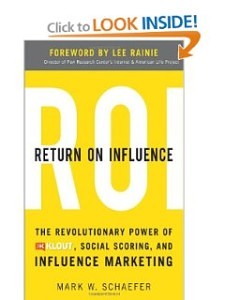


Meanwhile, a dear colleague of mine, Mark W. Schaefer, has written a quick read,Return on Influence, The Revolutionary Power of Klout, Social Scoring, and Influence Marketing, his second book that has hit the corporate world (IBM recently bought 500 copies) and the social media sector by storm.

Mark-Schaefer-BookBecause I know all three of these peeps and vouch for their own cred and influence, you ought to consider purchasing these books for your reading pleasure.

Now, back to the topic at hand…If some marketers think they’re drowning, how does a company cope with that?

Does every marketing team need to know every aspect of marketing, or can they learn in a steady trickle?

The good news is, everyone is in the same boat absorbing knowledge and learning new tactics at the same time. How marketers execute on these evolving techniques is how one differentiates.

Here are my thoughts on how companies should stay the course with these basics and never mind the marketing buzz until prepared to address them head on:

Five Marketing Basics

1. Set up a solid team of people with the right mix of marketing for various types of organizations, someone in PR, another knows email and inbound marketing, a copywriter, a social media enthusiast, and someone familiar with advertising for all media.

2. Assess and solidify brand and dust off that mission statement! It’s critical to revisit this to ensure the company is growing in alignment with founders’ goals and vision.

3. Hire Jayme Soulati (shameless, I know) to do your message mapping exercise. No matter if your company is established or just starting, message mapping charts your company’s communication course.

4. Build a responsive website. I’m not talking about a website that looks good on a mobile device; I’m talking about a scalable site that conforms to smart devices and positions calls to action and contact information on the top of the screen followed by all the rest of the goodies. When your company keeps a website that requires visitors to slide windows back and forth, then the message you’re sending is pretty much, “We just don’t care.”

5. Pay attention to social media and engage already. You have to; you just do. In this post-social media adoption era, there are still companies without the basics in place. Companies owe it to consumers to connect via social media channels. If all we get is a direct mail coupon with no other channel, that is grounds for negative online reputation.

Confused about any of the above? Please ask me, I’m right here.

By Jayme Soulati

SUBSCRIBE AND NEVER MISS A POST!


Related articles
  • [EN] Influencer Marketing: Blogs are the primary place where influencers engage – eMarketer
  • Why Platforms like @Traackr are Leading the Future of Influence Marketing
  • Google+ Meet Influence Marketing
Enhanced by Zemanta

Filed Under: Marketing, Social Media Strategy Tagged With: Danny Brown, Google+, Influence Marketing, influence scoring, Klout, Mark W. Schaefer, Social Media, Social Media Marketing

« Previous Page
Next Page »
ALT="Jayme Soulati"

Message Mapping is My Secret Sauce to Position Your Business with Customers!

Book a Call Now!
Free ebook

We listen, exchange ideas, execute, measure, and tweak as we go and grow.

Categories

Archives

Search this site

I'm a featured publisher in Shareaholic's Content Channels
Social Media Today Contributor
Proud 12 Most Writer

© 2010-2019. Soulati Media, Inc. All rights reserved. Dayton, Ohio, 45459 | 937.312.1363